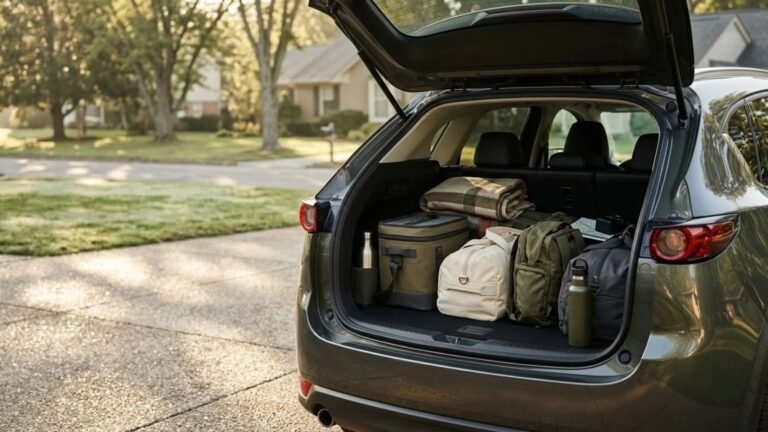
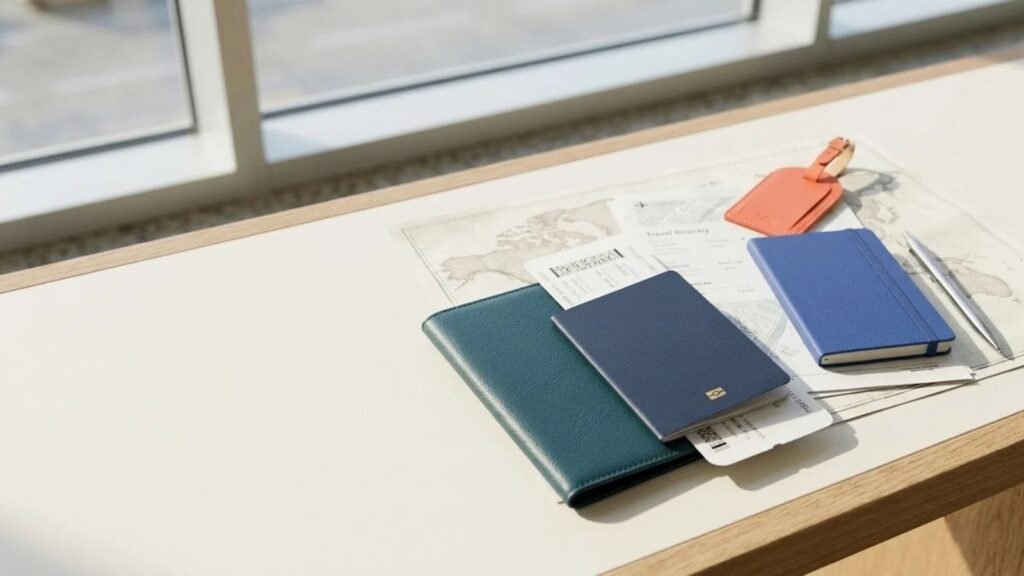
A travel documents checklist keeps the paperwork for a trip in one place, so you are not searching your bag at a border or check-in desk. The U.S. Department of State advises checking your passport early, confirming visa rules, carrying copies of key papers and keeping a set of copies separate from the originals.
This travel documents checklist covers twelve items for international trips, with official guidance from the State Department where it exists. Some items are our own suggestions and are labeled. Entry rules vary by country and change, so check your destination before you go. This is general information, not legal advice.
Key Takeaways
Key Takeaways
- A travel documents checklist starts with the passport. The State Department says many countries require at least six months of validity, and recommends six months beyond your return date as a general best practice.
- The State Department advises at least two blank pages in your passport, since some countries deny entry without them.
- Make multiple copies of your documents, give a set to a trusted person, keep a set apart from the originals and photograph them on your phone.
- Carry prescription medicines in labeled bottles with copies of the prescriptions, because some drugs are illegal in some countries.
- Check visa, health and child travel rules for your destination close to departure, since they change.
Why a Travel Documents Checklist Helps
Trips involve more paperwork than most people expect: identity papers, bookings, insurance and sometimes permissions and permits. A written list helps you gather everything early and notice gaps while you can still fix them.
The State Department’s International Travel Checklist is the model for this guide. It tells travelers to organize required travel documents, make copies, check the passport and visa, think about medicines, and consider insurance. Our guide on how to plan an international trip puts this list into the wider plan.

1. Passport
The passport is the core of any travel documents checklist. The State Department says many countries require at least six months of validity remaining, and more time may be needed if a visa is required.
It recommends a passport valid for six months beyond your return date as a general best practice, and at least two blank pages. Adult passports are generally valid for 10 years and children’s passports for 5 years, so check expiration dates carefully.
The State Department also says to apply for passports early. Processing times change, and we did not verify them for this guide.
2. Visa or Electronic Travel Authorization
Some countries require a visa or an electronic travel authorization. The State Department says to confirm requirements with the destination’s foreign embassy and to have all required papers before departure.
Keep the approval printed or saved in a way you can open without a data connection, which is our suggestion.
3. Copies of Your Documents
Copies are a safety net in a travel documents checklist. The State Department advises making multiple copies, giving a set to a trusted friend or family member, keeping a set separate from your originals and photographing your documents on your phone.
Store digital copies somewhere secure, such as a protected folder or an encrypted notes app. Avoid sharing them in open chats. That security advice is ours.
4. Tickets and Bookings
Flights, trains, hotels, tours and car rentals each produce confirmations. Keep them in one folder in your email and one printed set, as an author suggestion. Our guide on how to find cheap flights explains booking rules that matter if plans change.

5. Travel Insurance Papers
The State Department says that the U.S. government does not provide insurance or pay for any costs for U.S. citizens abroad, and that U.S. health plans, including Medicare and Medicaid, usually do not cover care abroad. It recommends considering travel medical insurance that covers emergency care and medical evacuation.
If you buy a policy, add the policy number and the emergency phone number to your travel documents checklist. Review policy details first, as the State Department advises.
6. Prescriptions and Medicines
The State Department warns that some prescription and over-the-counter drugs, including prescription narcotics, are illegal in some countries. It advises carrying copies of your prescriptions and keeping medicines in labeled bottles.
A letter from your clinician is a common extra step. That is our suggestion and may not be required. Check the destination’s rules before you pack.
7. Children’s Papers
If you travel with children, the State Department says you may need custody documents or a notarized permission letter from the other parent, even when one parent travels with the child. Children’s passports are generally valid for 5 years.
Rules vary by country and airline, so check early and keep copies.
8. Driver’s License and International Driving Permit
The State Department says many countries do not accept a U.S. driver’s license. You may need an International Driving Permit and extra auto insurance. Add your license to the travel documents checklist even if you do not plan to drive, since it can serve as a second form of identification, which is our suggestion.
9. Health Records and Vaccine Information
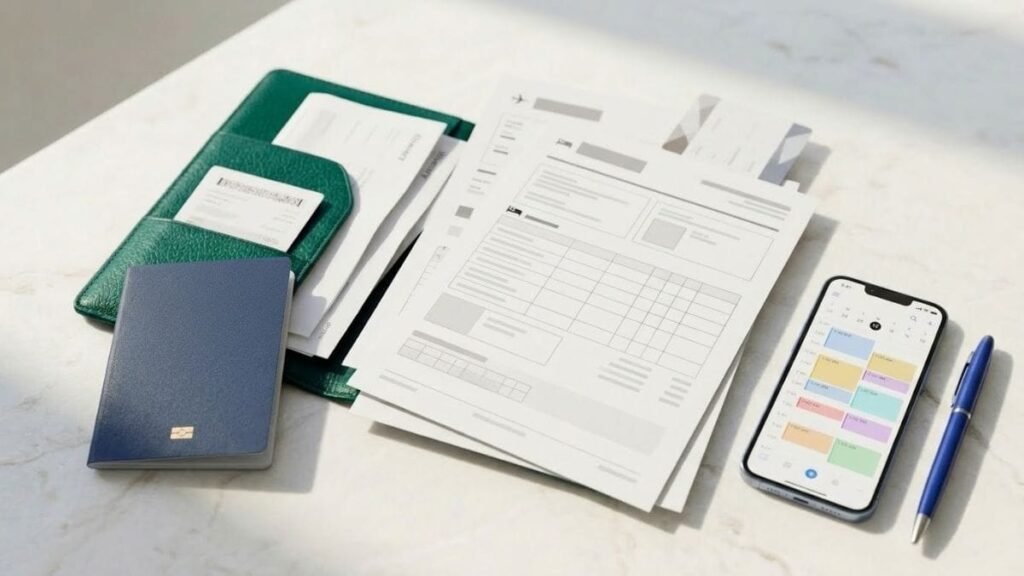
The State Department’s destination pages include vaccine and health information. Check them early, and ask a doctor or travel clinic about what you need. This is general guidance, and requirements differ by country.
10. Emergency Contacts and Embassy Details
Write down your emergency contact, your accommodation address and the local embassy or consulate details. The State Department’s Smart Traveler Enrollment Program, or STEP, sends email alerts from the U.S. embassy or consulate and helps the embassy reach you or your emergency contact. Add your STEP enrollment to your travel documents checklist.
11. Payment Cards and Some Cash
Take at least two payment methods and keep one in a separate place. These are author suggestions. The sources we read do not discuss currency or card fees.
12. Domestic Identification
For domestic flights, the TSA and your airline set the identification you need. This guide does not cover those rules, and we did not verify current requirements, so check the TSA website before you fly.

A Printable Travel Documents Checklist
Copy this table into a document or print it. The Done column is for you.
| Item | What to check | Done |
|---|---|---|
| Passport | Six months beyond return, two blank pages | |
| Visa or authorization | Approved and saved | |
| Copies | Set at home, set separate, phone photos | |
| Tickets and bookings | Confirmations in one place | |
| Insurance | Policy number and phone line | |
| Medicines | Labeled bottles and prescription copies | |
| Children’s papers | Permission letter if needed | |
| License and IDP | If driving abroad | |
| Health records | Destination health information checked | |
| Contacts | Emergency contact and embassy details | |
| Cards and cash | Two cards in different places | |
| Domestic ID | TSA rules checked |
How to Organize Your Travel Documents Checklist
Keep everything in one place. A slim folder or zip pouch holds the originals, and a second pouch holds the copies. These are author suggestions.
Group papers by purpose: identity, bookings, health and money.
A Travel Documents Checklist for Families
Families have extra items. Each person needs their own passport, and the State Department says you may need custody documents or a notarized permission letter when traveling with a child. A travel documents checklist for families should also list school or medical contacts and each child’s medicines.
Assign one adult to keep the folder, and give each older child a copy of the key details.
Digital and Paper Backups
A strong travel documents checklist includes backups. Digital copies help if a bag is lost, but they do not replace the paper originals. Photograph each document clearly, check that the images are readable and save them in a protected place.
Paper copies still matter when a phone battery dies. Keep one set in a different bag from the originals. The State Department advises keeping a set separate from your originals for the same reason.
When to Start the Travel Documents Checklist
Start as soon as you choose a destination. Passports and visas can take time, and the State Department says to apply early. A sensible author rule is to check the passport before booking and finish most paperwork a month before departure.
What People Most Often Forget
The sources we read do not rank what people forget. From the State Department list, the items most easily missed on a travel documents checklist are probably copies kept separately, prescription copies and children’s permission letters. That is our reading and not a statistic.
Mistakes to Avoid
- Checking the passport after booking nonrefundable flights.
- Packing medicines in unlabeled containers.
- Keeping all copies in one bag.
- Assuming a visa is not needed without checking.
- Forgetting to update the list when plans change.
Our guides on international travel packing list and airport carry on rules cover what goes in the bag.
Who Needs Extra Care
Travelers with a medical condition, expired passports, dual citizenship, children or a complicated itinerary should check requirements early. If you rely on medicine, talk to a doctor before the trip. For visa and entry questions, the destination’s embassy is the best source.
FAQs
What should be on a travel documents checklist?
Passport, visa or authorization if needed, copies, bookings, insurance papers, medicines and prescriptions, children’s papers, driver’s license or permit, emergency contacts and payment cards.
Can I print this travel documents checklist?
Yes. Copy the table above into a document and print it.
How much passport validity do I need?
It depends on the country. The State Department says many require six months, and recommends six months beyond your return date as a best practice.
Do I need to carry copies of documents?
The State Department advises making multiple copies and keeping a set separate from your originals.
What are the three documents required to travel internationally?
Most trips need a valid passport and any visa or entry authorization the destination requires. Other requirements vary, so confirm with the State Department for your destination.
Conclusion
A travel documents checklist protects you from last-minute surprises. Check your passport first, confirm visa rules, make copies, carry labeled medicines and prescriptions, and keep emergency contacts handy.
The evidence has limits. The advice comes from the U.S. Department of State and requirements change by destination, while the printable table and several tips are our own suggestions. Print the checklist today, tick off what you already have and set a date to finish the rest.
Keep your travel documents checklist with your trip folder and update it whenever plans change. A few minutes of checking now can save you hours of stress at the airport or border.