Airport carry on rules come from two places. The Transportation Security Administration decides what may pass through the security checkpoint, and each airline sets its own size, weight and fee rules for bags in the cabin. Mixing the two up is a common source of surprise at the airport.
This guide explains airport carry on rules using TSA and Department of Transportation pages, and it labels packing tips as our own suggestions. Rules change, so confirm the details with the TSA and your airline before you fly. This is general information.
Key Takeaways
Key Takeaways
- Airport carry on rules have two layers: the TSA decides what may go through security, and your airline decides bag size, weight and fees.
- The TSA 3-1-1 rule allows liquids in containers of 3.4 ounces or smaller, all in one quart-size clear bag.
- The TSA officer at the checkpoint makes the final decision about whether an item may pass.
- No single universal size limit exists across airlines, so check your own airline’s page for your fare.
- The Department of Transportation requires airlines to link bag and fee information from their homepage and first fare screen.
The Two Sets of Airport Carry On Rules
Think of airport carry on rules as two checks. The first is the airline’s. It decides how many bags you may bring, how large they can be and what you pay. The second is the TSA’s. It decides which items are allowed through the checkpoint.
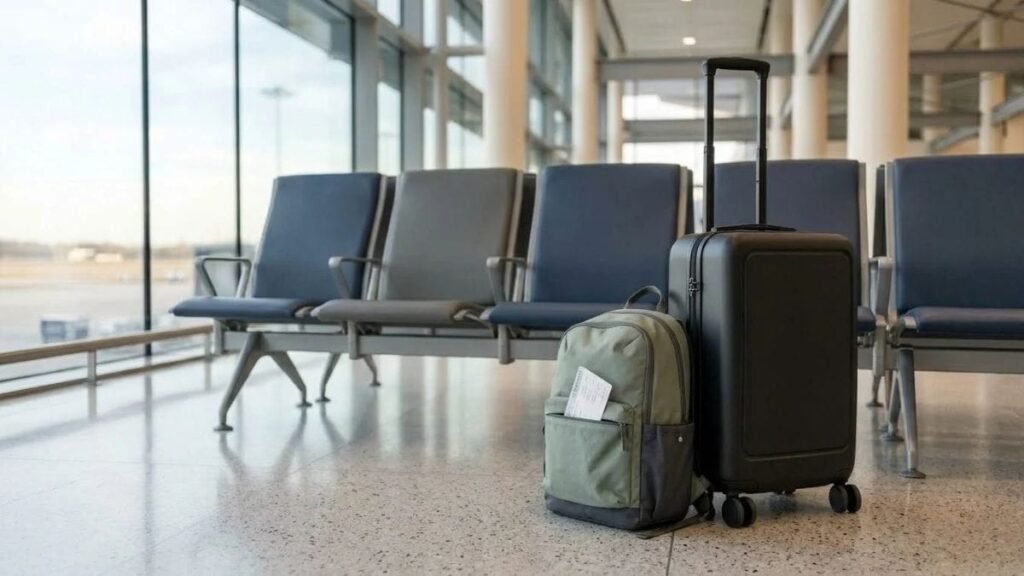
You can pass one check and fail the other. A bag that fits the airline’s size limit may still hold a bottle that is too large for security. A tidy bag of 3.4 ounce liquids may still be too big for a basic fare.
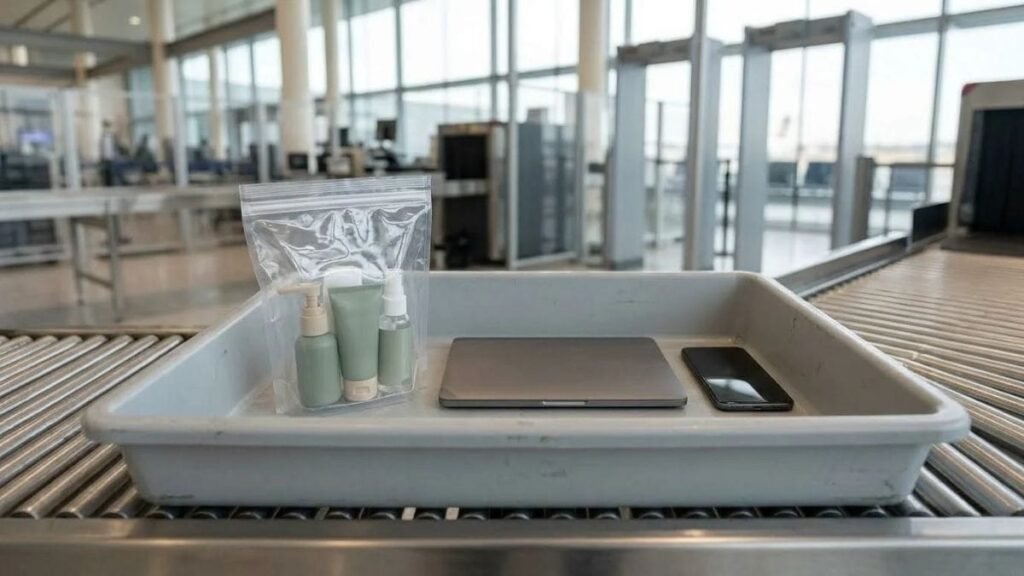
The TSA 3-1-1 Rule for Liquids
The TSA 3-1-1 rule is the best known of the airport carry on rules. Each traveler may bring liquids, gels, aerosols, creams and pastes in containers of 3.4 ounces (100 milliliters) or smaller, packed together in one quart-size clear bag.
Hand sanitizer is covered by the same limit. Containers bigger than 3.4 ounces go in a checked bag, even if they are only partly full. A bag that is too full to close easily can cause delays at the screening point.
Items bought after the checkpoint are handled differently, since they have already passed screening. See the TSA page for the current wording.
What Can I Bring? Use the TSA Search Tool
When you are unsure, use the TSA page What Can I Bring? to look up an item. It lists whether an item is allowed in a carry-on, a checked bag, both or neither.
The page also says that the TSA officer makes the final decision at the checkpoint, even if an item appears allowed. This is why packing sharp tools, fireworks or other questionable items in a carry-on is a bad idea. If an item matters to you, put it in a checked bag or leave it at home.
Electronics and Batteries
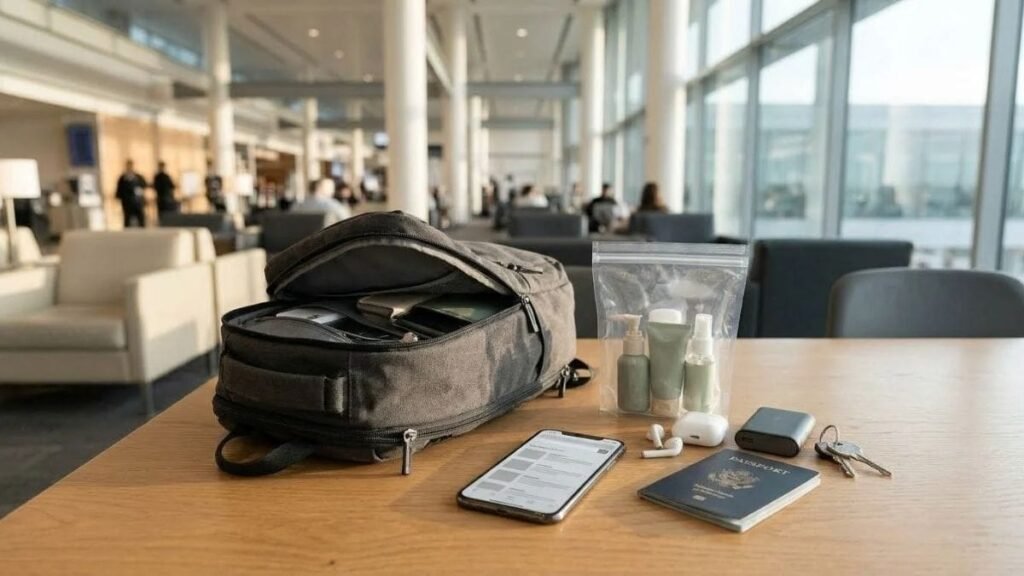
The TSA notes that electronic devices may need to be powered on at the checkpoint, so make sure your phone and laptop are charged. Larger electronics may need to come out of the bag for screening.
Airlines and regulators often require spare lithium batteries and power banks to travel in the cabin rather than the hold. We did not verify the exact current wording, so check your airline’s page before you fly.
Medicines, Baby Items and Special Needs
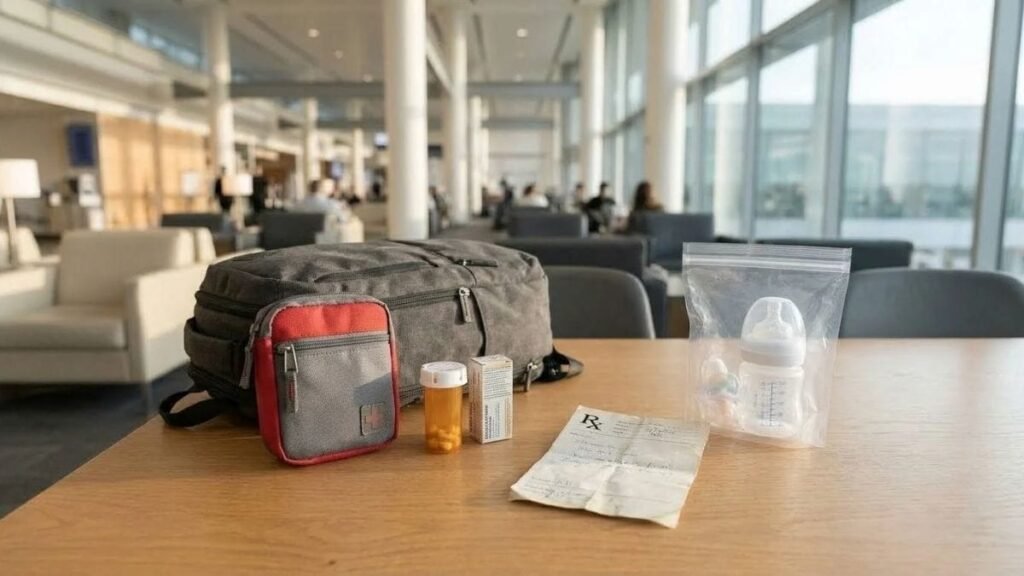
Medicines are generally allowed in a carry-on, and many travelers keep them there so they stay close.
Keep them in labeled containers and bring a copy of the prescription, which is our suggestion. For exact rules on liquid medicines, baby food or formula and special equipment, check the TSA page, because the limits can differ from the standard liquid rule.
If you need help at security, contact the TSA before you travel. Details are on the TSA site.
Airline Size, Weight and Fee Rules
Airport carry on rules about bag size vary by airline. We found no universal size that applies to every airline, so look up your own airline’s limit for your fare. Smaller sizes may apply on basic fares and some regional aircraft.
The Department of Transportation says airlines must show bag fee information, with a link from their homepage and the first screen that shows fares. It also covers buying a ticket in general. Read it before you pay so there are no fee surprises at the gate.
Many airlines count a personal item, such as a small backpack or purse, separately from a carry-on. Others restrict personal items on cheaper fares. Check the wording for your ticket.
How to Pack to Fit Airport Carry On Rules
These tips are our suggestions. Put liquids in a clear bag at the top or in a side pocket so you can remove it quickly. Keep the laptop where it can slide out. Place bulky layers on your body or in the personal item if the bag is full.
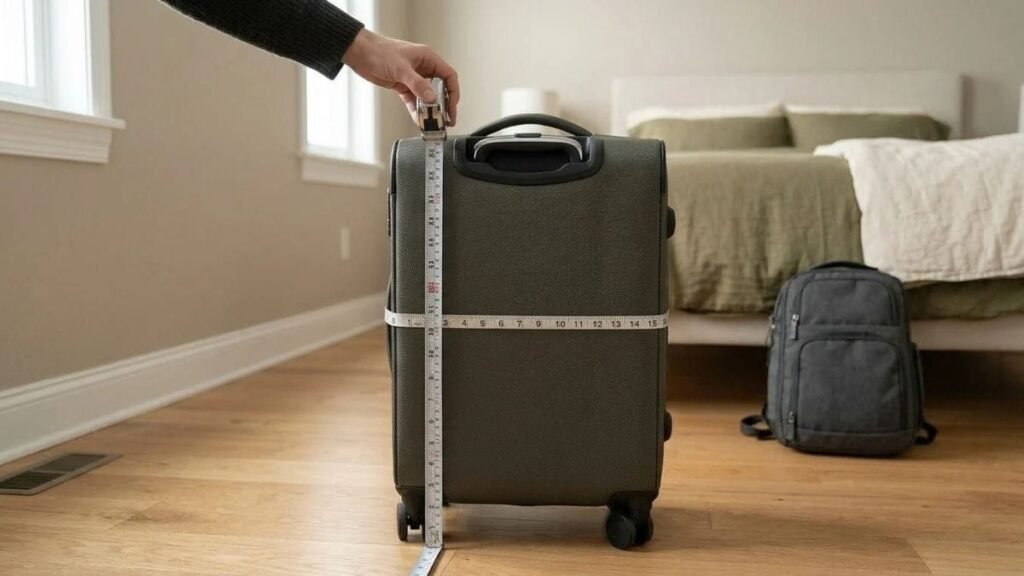
Weigh the bag at home when your airline sets a weight limit. Measure it with the wheels and handles included, since the limit often includes them. Pack a small empty bag for souvenirs if you plan to buy things.
Our international travel packing list and road trip essentials show how packing varies by trip type.
Carry-On Bag, Personal Item or Checked Bag
Most airport carry on rules assume you bring one bag for the overhead bin and one personal item that fits under the seat. Airlines define these differently, and some fares include only the personal item. Read the fare details before you buy, because airport carry on rules on cheaper fares can be stricter.
Compare the total cost with a checked bag.
If a bag is too large, the gate agent may ask you to check it, sometimes for a fee. Packing to the limit of your airline’s rules avoids that. When you have items that may not pass security, such as large liquids, a checked bag is the simpler choice.
Our guide on how to find cheap flights explains why the lowest fare may cost more once bags are added.
A Day-of-Travel Routine
These steps are our suggestions. Check the airline’s bag page the day before, since airport carry on rules can change. Make sure liquids are in the clear bag and the bag is within reach. Charge your phone and laptop. Keep your boarding pass and ID in an easy pocket.
At security, remove the items the officer asks for, place the liquids bag where it can be seen, and follow the instructions at the checkpoint. Rules at screening can differ by airport and lane, so follow the officer’s directions. Following airport carry on rules calmly saves time for everyone in line.
International Flights and Connections
If your trip crosses borders, the airport carry on rules of other countries and airports may differ from the TSA’s. Liquids rules are similar in many places, but we did not verify them for specific countries, so check the airport or government site for each stop. A connection can mean screening a second time.
The State Department’s international travel checklist is a good place to start planning, and our travel documents checklist covers the papers you need. Keep documents and medicines in your personal item so they stay with you.
Common Mistakes With Airport Carry On Rules
- Bringing a full-size bottle of liquid or sunscreen.
- Assuming the bag size limit is the same on every airline.
- Forgetting that basic fares may not include a carry-on bag.
- Packing the quart bag at the bottom.
- Leaving a device uncharged.
Quick Reference Table for Airport Carry On Rules
Use this table to see which authority answers each question.
| Question | Where to check |
|---|---|
| Is this item allowed through security? | TSA What Can I Bring? |
| How large can my bag be? | Your airline’s bag page |
| Will I pay a fee? | Airline fee page linked from its homepage |
| Are liquids allowed? | TSA 3-1-1 rule |
Who Should Check Extra Carefully
Travelers with medicines or medical devices should check the TSA page ahead of time. Families with baby items should look up the rule for formula and milk. People on connecting or international flights should also check the rules of the other country or airport, since they may differ from US rules.
FAQs
What are the airport carry on rules for liquids?
Containers of 3.4 ounces or smaller, packed in one quart-size clear bag, under the TSA 3-1-1 rule.
Is there a standard carry-on size?
No universal size was found. Airlines set their own limits, so check yours.
Do airport carry on rules differ on international flights?
They can. The TSA covers US checkpoints, and other countries and airports set their own rules, so check each stop.
Who decides if an item can go through security?
The TSA officer at the checkpoint makes the final decision.
Do airlines have to tell me about bag fees?
Yes. The Department of Transportation requires airlines to link bag fee information from their homepage and the first screen with fares.
Conclusion
Airport carry on rules have two layers. The TSA decides what may pass through security, using the 3-1-1 rule for liquids, and your airline decides the size, weight and fee for your bag. Check both before you leave home, and save the airport carry on rules for your airline on your phone.
The evidence has limits.
The security and fee rules come from the TSA and the Department of Transportation, while the packing tips are our own suggestions. We found no universal bag size and did not verify battery wording, so look up your airline and the TSA page on the day you fly.
A few minutes of checking can save you a fee, a delay or a bag left behind.