Here is how to declutter your home without a weekend purge: pick one small zone, sort what is in it, decide what is in the way, give what stays a home and set a simple rule to keep it clear. This guide explains how to declutter your home in seven steps, with a room table and a worked example.
Key Takeaways
- How to declutter your home comes down to small zones, quick sorting, a clear test for each item, and a simple rule to stop clutter returning.
- A Princeton psychology researcher reported that clutter competes for attention in the brain, and that it may tire cognitive functions over time.
- A UCLA-linked study of 32 Los Angeles families found that managing a large volume of possessions raised stress hormone levels in mothers.
- Clutter and hoarding disorder are not the same, according to Mayo Clinic, and ongoing distress about discarding is a reason to contact a provider.
- A suggested approach: set a 15 minute timer, start with one drawer or surface, and finish the zone before you begin another.
What the Research Says Before You Learn How to Declutter Your Home
Psychology professor Sabine Kastner, writing in Princeton Alumni Weekly, described fMRI work in which an unattended second object appeared in the brain as a fuzzy version of itself. She concluded that clutter competes for attention and may tire cognitive functions over time. The article does not report sample size or other study details.
A University of California press release on a UCLA-affiliated study of 32 Los Angeles families reported that managing a large volume of possessions raised stress hormones in mothers. Only 25 percent of garages could hold cars. The sample is small, so this is a signal, not a rule.

How to Declutter Your Home: Clutter Versus Hoarding
On the APA Speaking of Psychology podcast, DePaul University psychologist Joseph Ferrari separates clutter, an overabundance of varied possessions, from hoarding, which he describes as a disorder involving many duplicates. A 2016 study he co-authored of about 1,600 adults linked more clutter to lower life satisfaction.
Mayo Clinic defines hoarding disorder as ongoing difficulty throwing away possessions because you believe you need to save them. If that describes you, the steps below are not enough. Contact a health care or mental health provider with experience in hoarding.
7 Steps: How to Declutter Your Home One Zone at a Time
Step 1: Pick One Small Zone and Set a Timer
Choose a zone that takes 15 minutes or less, such as a kitchen drawer, a nightstand or a bathroom shelf. Set a timer and stop when it rings. A small win builds momentum, and an unfinished whole house does not.
Step 2: Empty the Zone Completely
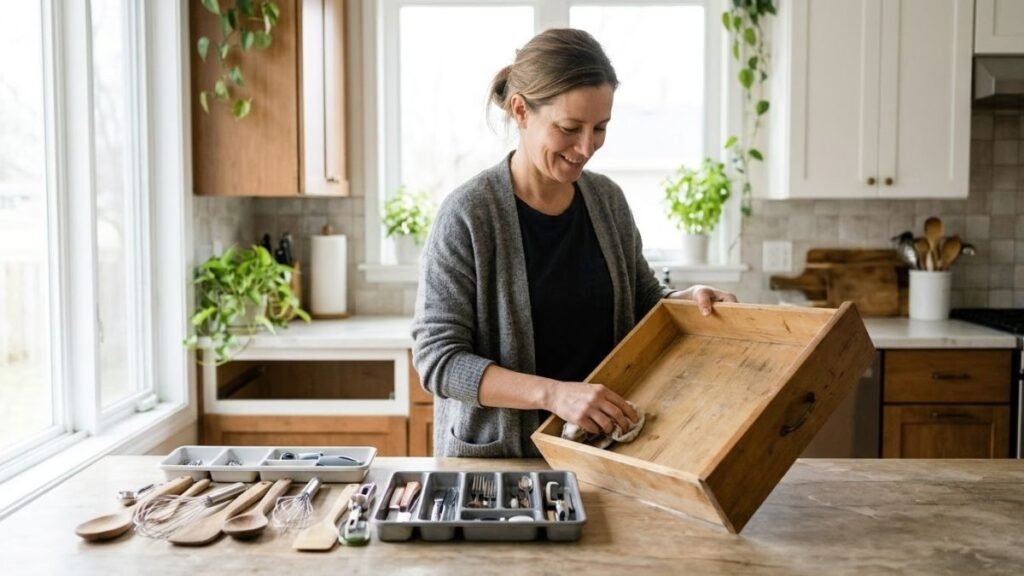
Take everything out of the drawer or off the surface and wipe it clean. Seeing every item at once is the quickest way to notice duplicates, broken things and items you forgot you owned.
Step 3: Sort Into Four Piles
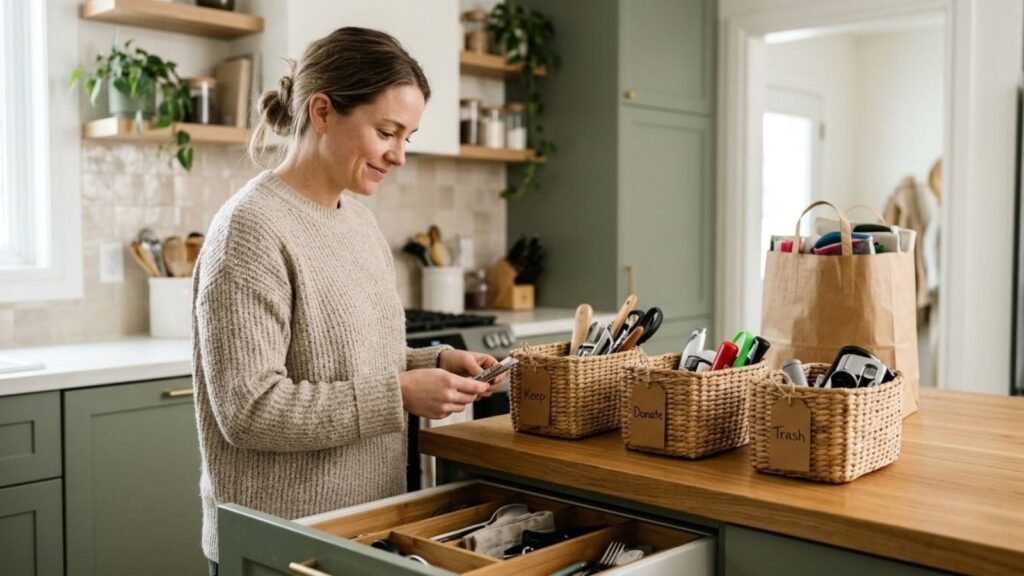
Use four labelled spots: keep, donate, recycle or trash, and belongs elsewhere. Handle each item once and put donations in a bag by the door. This is the core of how to declutter your home quickly.
Step 4: Ask Whether an Item Is in the Way
In the APA conversation, Ferrari suggests asking whether an item is in the way and keeping things that bring lasting meaning, not momentary happiness. He also cautions against the touch-it-and-keep-it approach, since handling an item can make people keep it.
Step 5: Leave Sentimental Items for Last
Photos, gifts and keepsakes slow everyone down. Skip them in your first rounds and return when you have momentum. A suggested approach: keep a single box per person for keepsakes, and photograph large items you cannot store.

Step 6: Give Everything That Stays a Home
Ferrari advises sorting and organizing before buying storage bins. Put frequently used items within reach and rare items higher or lower. Label shelves or bins so every item has an obvious place to return to.
Step 7: Set a Rule That Stops Clutter Returning
A suggested approach is a one in, one out rule: when something new comes into a room, something old leaves. Add a ten minute weekly reset, and keep a donation bag where you will see it fill.
A Worked Example: How to Declutter Your Home Starting With One Kitchen Drawer
Suppose the kitchen junk drawer is the problem. Set a 15 minute timer, empty the drawer onto the counter and wipe it out. Sort what you find into the four piles from step 3.
Typical finds are dead batteries, loose keys, takeout menus and tangled cords. Recycle the batteries, donate the spare gadgets and move the keys to a hook. Put the items you use weekly back in, in a small tray.
The drawer is done in one sitting. That is how to declutter your home without feeling overwhelmed: finish a tiny zone, notice the relief, then choose the next zone. Repeat once or twice a week.
| Room | First 15 minute task | Question to ask |
|---|---|---|
| Kitchen | Clear one counter and one drawer | Have I used this in the last six months? |
| Bedroom | Empty the nightstand and floor | Does this belong where I sleep? |
| Closet | Remove ten items you no longer wear | Would I buy this again today? |
| Bathroom | Clear the shelf under the sink | Is this expired or duplicated? |
| Living room | Reset one table and the shelf nearest the sofa | Is this in the way? |
The table shows how to declutter your home room by room using the same short pattern. The tasks and questions are author suggestions, not research findings, so adjust them to your own space and schedule.

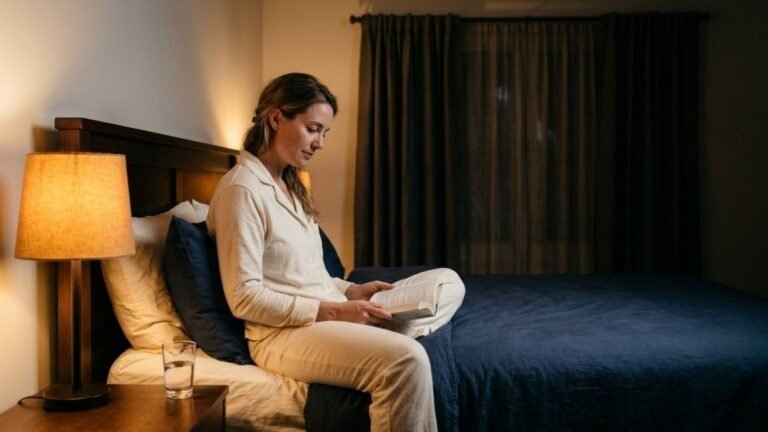
Why Bedroom Clutter Deserves Early Attention
A clinical psychologist at St. Lawrence University, Pamela Thacher, presented findings at the 2015 SLEEP conference linking more clutter to a higher likelihood of sleep disorders. Her sample focused on people who consider themselves hoarders, and the news report in WTOP gives no sample size. Treat it as an early signal.
A suggested approach: if you only have time for one room when learning how to declutter your home, start where you sleep. Clear the floor, nightstand and chair, and keep surfaces mostly free. Our morning routine ideas guide shows how a calmer bedroom helps the day start well.
How to Declutter Your Home and Keep It That Way
The last part of how to declutter your home is keeping it that way. Our habits for health guide lists starter habits you can stack, such as a two minute evening tidy. A first purge lasts only if habits change. A suggested approach: link the tidy to something you already do, like switching off the kitchen light.
The Ferrari study of 1,600 adults was reported through the APA podcast page, which does not describe causes. So it does not show that decluttering raises life satisfaction. It shows an association. That is still a reasonable reason to try, as long as you expect modest, gradual results.
Common Mistakes When Learning How to Declutter Your Home
A suggested approach is to avoid three errors. The first is starting with sentimental items, which stalls most people. The second is buying storage before sorting, which hides clutter instead of removing it. Knowing how to declutter your home means finishing what you sort. The third is trying to do the whole house in one weekend.
Another trap is moving clutter into a closet or garage. If it was not sorted, it is still clutter. The UC study found that only 25 percent of sampled garages could hold cars, a reminder that overflow rooms fill up fast.

When to Get Extra Support
If discarding items causes persistent distress, if pathways are blocked or if rooms cannot be used as intended, speak with a doctor or mental health provider. These steps are general information about ordinary household clutter and are not medical advice.
FAQs
Where should I start when I want to know how to declutter your home?
Start with one small zone that takes 15 minutes or less, such as a drawer or nightstand. Finish it fully before you begin another. A bedroom is a sensible first room if sleep is a concern.
How long does it take to declutter a house?
No source reviewed gives a standard time for how to declutter your home. Working in 15 minute zones, once or twice a week, lets you make steady progress without a weekend marathon. The pace matters less than finishing each zone.
What is the difference between clutter and hoarding?
Mayo Clinic defines hoarding disorder as ongoing difficulty parting with possessions because you believe you need to save them. Ordinary clutter is an overabundance of things without that distress. If discarding feels impossible, contact a provider.
What should I do with items I cannot decide about?
Put them in a box with a date and review it in a few months. Ferrari warns against the touch-it-and-keep-it approach, so decide quickly and avoid handling every item.
Does decluttering reduce stress?
Some research links clutter to higher stress hormones and lower life satisfaction. Those studies are small or correlational, so they do not prove decluttering will reduce stress. Many people still find a clearer space easier to live in.
Conclusion
How to declutter your home is less about discipline than about size. Pick one small zone, empty it, sort it into four piles, ask whether each item is in the way, and give what stays a clear home. Then add a one in, one out rule so the space stays clear for good.
Set a 15 minute timer today and finish one drawer or one surface. Repeat this routine for how to declutter your home each week. Do the next zone this week and the one after next week. Leave sentimental items for later, and ask for professional help if letting go of things feels impossible.