

Plenty of articles promise that the right foods for healthy skin will erase wrinkles, clear breakouts and give you a glow within a week. The honest picture is more modest and, in a way, more useful.
A balanced eating pattern supports the skin, a few nutrients have clear jobs in it, and no single food works like a cream. This guide covers nine everyday foods, the nutrients behind them, and where the evidence is thin. It is general information, not medical advice.
Key Takeaways
- A systematic review of 27 studies found that diet is linked to skin color and skin aging, but only one of those studies tested real food, so the evidence is still early.
- Vitamin C helps the body make collagen, and the NIH lists citrus, peppers, kiwifruit and strawberries as good sources.
- Zinc helps wounds heal, and the NIH says adult women need 8 mg a day and men 11 mg.
- Whole foods for healthy skin are the safer route: high-dose vitamin E and zinc supplements carry real cautions.
- See a dermatologist for persistent acne, rashes or changing moles, because food will not fix those.
What Science Says About Foods for Healthy Skin
The most useful single piece of evidence is a systematic review by Pezdirc and colleagues, published in Nutrition Research in 2015. It examined 27 studies in adults. According to its PubMed abstract, all of the observational studies, which covered 4,741 people, found a significant link between what people ate and their skin coloration or skin aging.
There is an important catch. Most of the interventions in that review tested supplements, and only one study examined actual food.
The authors called for better trials in more representative groups. So the fair reading is that diet and skin are connected, while the proof that any particular meal changes your complexion is limited.
Harvard Health Publishing makes a modest claim in the same spirit. It says that eating about three servings of fruits and vegetables a day may give a rosier complexion, and it presents this as a simple way to look healthier, not a treatment. You can read it in its piece on fruits and vegetables.
9 Foods for Healthy Skin and Why They Earn a Place
The table below links each of the foods for healthy skin to a nutrient with a documented job in the body. It does not promise a visible result, because the research on skin appearance is limited.
| Food | Nutrient to know | Documented role |
| Oranges and grapefruit | Vitamin C | Helps the body make collagen |
| Red peppers and kiwifruit | Vitamin C | Antioxidant that protects cells |
| Strawberries | Vitamin C | Counts toward the daily amount |
| Almonds and sunflower seeds | Vitamin E | Fat soluble antioxidant |
| Spinach and broccoli | Vitamin E, vitamin C | Small amounts of each |
| Salmon and sardines | Omega-3 fats | Part of a heart healthy pattern |
| Eggs and beans | Zinc | Helps wounds heal |
| Poultry and shellfish | Zinc | Among the richest sources |
| Extra virgin olive oil | Unsaturated fat | Main fat in the Mediterranean diet |
Citrus, Peppers, Kiwifruit and Berries
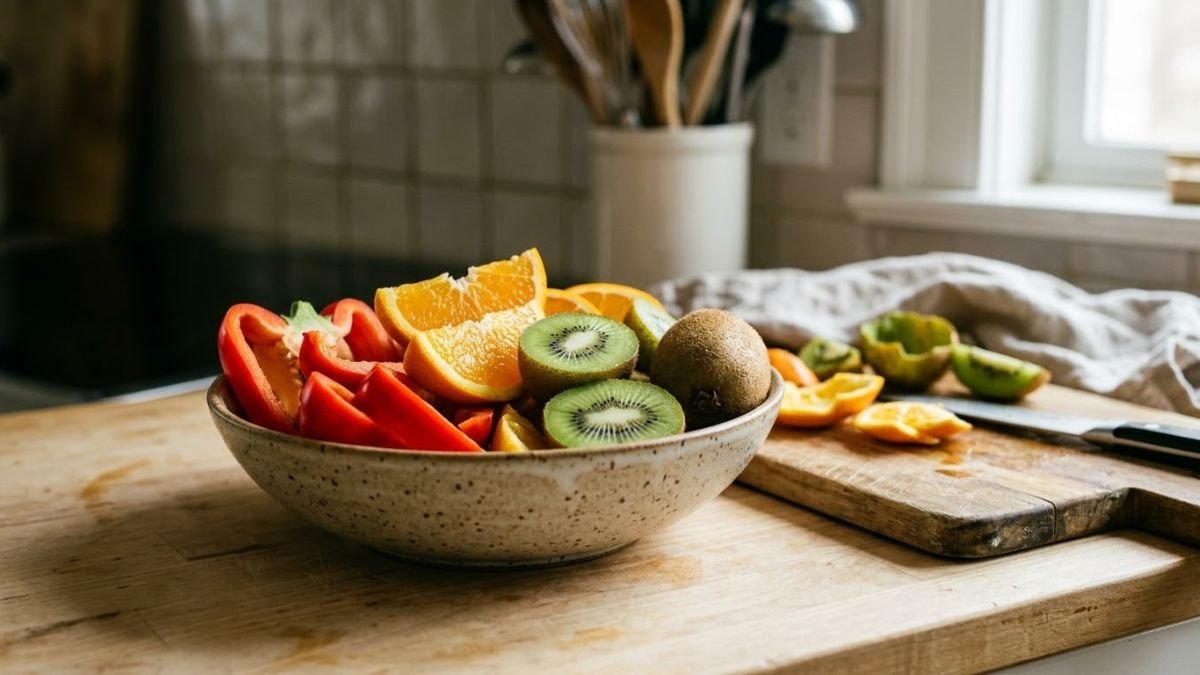
The NIH vitamin C fact sheet explains that vitamin C helps the body make collagen, a protein needed for wound healing. It also acts as an antioxidant that helps protect cells from free radicals, which come partly from the sun’s ultraviolet light.

That fact sheet names citrus fruit, red and green peppers, kiwifruit, broccoli, strawberries, cantaloupe and tomatoes as sources. It sets the adult daily amount at 75 mg for women and 90 mg for men.
The same page makes no claim that vitamin C improves wrinkles or skin appearance, and neither should you. These are best foods for skin health in the sense that they cover a basic need, not because they reverse aging.
Nuts, Seeds and Leafy Greens
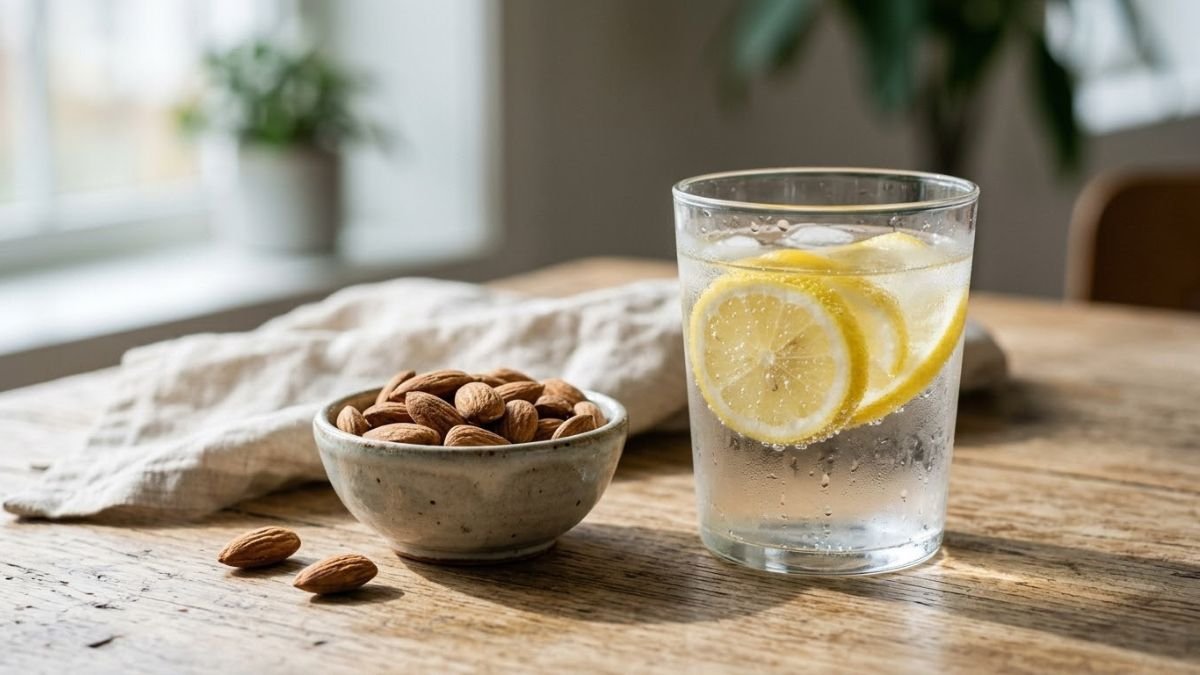
According to the NIH vitamin E fact sheet, sunflower seeds, almonds, hazelnuts and peanuts are strong sources, with spinach and broccoli adding smaller amounts. Adults need about 15 mg a day.
The sheet says vitamin E from food does not need to be limited, but high-dose supplements can raise bleeding risk, particularly alongside blood thinners. That is a practical reason to prefer a handful of almonds over a pill.
Fatty Fish and Olive Oil
The Mayo Clinic’s Mediterranean diet guide recommends fish or shellfish two to three times a week and extra virgin olive oil as the main fat. It notes that fatty fish such as salmon, sardines and mackerel supply omega-3 fatty acids, which may reduce inflammation.
Mayo presents these as heart and general health benefits, not skin treatments. Still, an eating pattern built around fish, vegetables and olive oil is a sensible base for anything that depends on your overall health, skin included.
Eggs, Beans and Other Zinc Sources
The NIH zinc fact sheet says zinc helps wounds heal. Oysters are the richest source, followed by meat, fish, poultry, crab and lobster, with beans, nuts, whole grains, eggs and dairy providing some.

Adult women need 8 mg a day and men 11 mg. The upper limit is 40 mg a day from all sources combined, so a zinc supplement taken casually on top of fortified foods can overshoot it.
Foods for Clear Skin: What Can You Realistically Expect?
Many readers search for foods for clear skin because of acne. Here the honest answer is that the sources reviewed for this guide do not show that any food clears acne.
A Mediterranean style pattern of vegetables, fruit, fish and whole grains is a healthy choice on its own merits, but it is not a replacement for an acne treatment prescribed by a dermatologist.
The same caution applies to the other foods good for skin: a food can be good for you without being proven to change a specific skin condition. That gap between healthy and proven is where most marketing lives, so read claims with it in mind.
If breakouts are painful, scarring or persistent, book an appointment. Changing your diet while ignoring a treatable condition can cost months of skin that could have been calmer.
How to Build a Simple Skin-Friendly Plate
The strongest advice on foods for healthy skin is to make an ordinary habit slightly better, not to chase a superfood. A workable pattern looks like this:
- Add fruit or vegetables at every meal. Aim toward the three servings a day that Harvard Health links with a rosier complexion, and count peppers, berries and leafy greens.
- Eat fish twice a week. Salmon, sardines or mackerel fit the Mayo Clinic pattern.
- Choose nuts and seeds for snacks. A small handful of almonds or sunflower seeds covers some of your vitamin E.
- Use extra virgin olive oil as your main cooking fat. It replaces saturated fat in the Mediterranean pattern.
- Include a zinc source most days. Eggs, beans, poultry or whole grains all count.
What About Foods for Skin Glow?
People often ask which foods give a skin glow. Harvard’s cautious statement about a rosier complexion is the closest finding in the sources reviewed, and it concerns fruit and vegetable intake in general. No source reviewed here backs a promise of instant radiance from one smoothie or one juice.
Think of glow as the by-product of consistent eating, sleep, sun protection and not smoking. The Mayo Clinic also lists smoking and heavy drinking among lifestyle factors that can worsen the look of the skin around the eyes, which hints at how much daily habits matter beyond the plate.
Supplements, Sun and the Bigger Picture
Pills are tempting, but foods for healthy skin carry no overdose risk at normal portions, and the 2015 review noted that most of its positive trials involved supplements. That does not make supplements risk free.
High-dose vitamin E can raise bleeding risk, and zinc above 40 mg a day exceeds the NIH upper limit. Antioxidant supplements may also interfere with chemotherapy or radiation, so anyone in treatment should ask their doctor first.
Even the best foods for healthy skin cannot replace sun protection. The Mayo Clinic advises broad-spectrum sunscreen of SPF 30 or higher every day, even on cloudy days, and no berry offsets a sunburn. For a related approach, BitComfy has a guide to anti aging foods for women and one on natural tips to improve hair, skin and nails.
FAQs
What are the best foods for skin health?
Fruits and vegetables rich in vitamin C, nuts and seeds with vitamin E, fatty fish, and zinc sources such as eggs and beans all have documented roles in the body. None is a cure, so aim for variety.
Are foods good for skin better than supplements?
Usually, yes, as a starting point. Foods for healthy skin come with other nutrients and carries no overdose risk at normal portions, while the NIH lists real cautions for high-dose vitamin E and zinc. Ask a professional before taking either.
How long do foods take to show on the skin?
The sources reviewed do not give a timeline. Skin changes slowly, so judge a new eating pattern over months, not days, and expect modest differences.
Can food clear acne?
The sources reviewed do not show that. Treat acne with advice from a dermatologist, and view diet as a general support.
Which single food is best?
There is none. The research links overall eating patterns with skin color and aging, so a varied plate beats any one ingredient.
Conclusion
Foods for healthy skin work the way most nutrition works: quietly, over time, as part of a pattern. Fruit and vegetables, nuts, fish, eggs and olive oil each supply nutrients with documented jobs, yet the research on visible results remains early, with only one trial of real food in the 2015 review.
Treat any promise of foods for healthy skin that deliver a glowing complexion in a week with suspicion, protect your skin from the sun, and see a dermatologist for acne or changing moles.
Your next step is small and easy to keep: add one extra serving of fruit or vegetables to tomorrow’s lunch, repeat it for a month, and notice how your eating pattern, energy and skin feel.