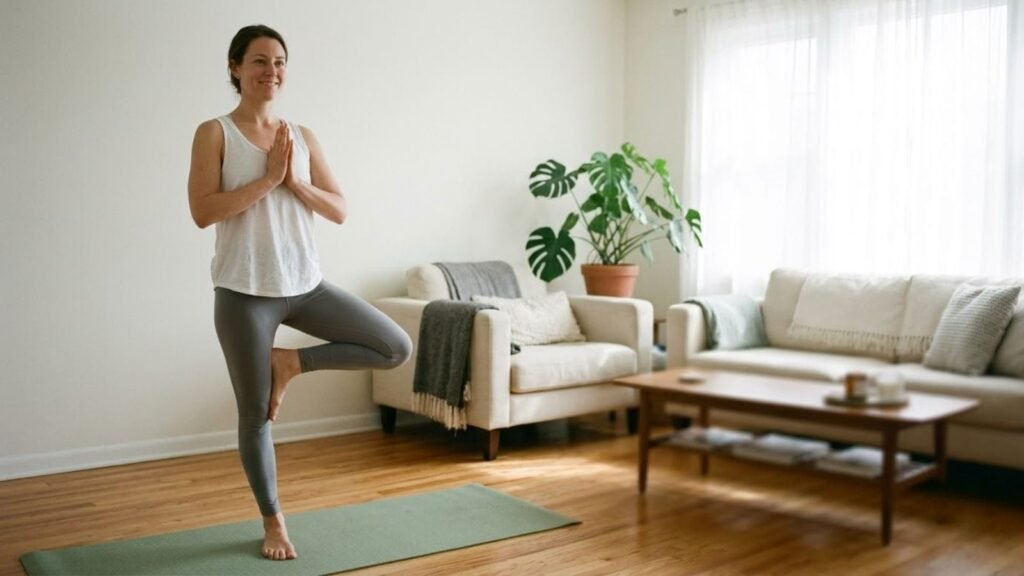
Yoga for beginners at home can start with six gentle poses, a mat or soft surface, and a few calm breaths in each. This guide explains yoga for beginners at home step by step, with a 15 minute sequence, the safety limits the health sources give, and when to ask a professional first.
Key Takeaways
- Yoga for beginners at home works best with gentle poses, slow breathing, a soft surface and a willingness to stop when something hurts.
- The US National Center for Complementary and Integrative Health says yoga is generally safe for healthy people, and that learning without supervision has been linked to higher risks.
- MedlinePlus suggests starting with a beginner class and lists pregnancy, high blood pressure, glaucoma, sciatica and arthritis as reasons to check with a doctor first.
- A 2011 trial of 228 adults found yoga beat a self-care book for chronic low back pain, but did not beat stretching.
- A suggested approach: begin with five to ten minutes of six poses, hold each for five breaths and increase slowly.
What Yoga for Beginners at Home Is and What the Evidence Says
Yoga usually combines physical postures, breathing techniques and meditation, according to the National Center for Complementary and Integrative Health. The page says most research covers low-back pain, with some benefit suggested. Smaller bodies of evidence cover neck pain, headaches and knee pain, and possible help for anxiety, depression and sleep.
A Group Health trial of 228 adults, described by Kaiser Permanente Washington Health Research Institute, found yoga more effective than a self-care book for chronic low back pain. It was no more effective than stretching. The participants had moderate pain and were mostly already active, which limits how widely the result applies.
Is Yoga for Beginners at Home Safe?
The NCCIH page says yoga is generally considered safe for healthy people when practiced appropriately, but injuries can happen. It says practicing under a qualified instructor lowers the risk, and that learning on your own without supervision has been associated with higher risks.
MedlinePlus suggests starting with a beginner class and telling the instructor about any injuries or conditions. That is a fair caution for a home practice. A suggested approach: try one or two classes first, or follow a beginner video by a qualified teacher, and keep the poses gentle.
Check with a doctor first if you are pregnant, or have high blood pressure, glaucoma, sciatica, arthritis, another health problem or an injury. MedlinePlus says these conditions may mean avoiding or modifying some poses.
Possible Benefits of Yoga for Beginners at Home
The NCCIH page says studies suggest yoga may help with stress, healthy habits, mental and emotional health, sleep and balance. MedlinePlus adds that it may improve fitness, posture and flexibility, and may lower blood pressure and heart rate.
Those words are hedged on purpose. The Mayo Clinic News Network also says yoga may reduce stress, and quotes an instructor, not a trial. Treat the benefits of yoga for beginners at home as possible, and judge the practice by how you feel.
How to Set Up for Yoga for Beginners at Home
You need very little. Kaiser Permanente advises a yoga mat or soft surface for floor poses, and a strap, belt or towel for reaching. MedlinePlus suggests clothing that lets you move freely, plenty of water and a rule to stop and rest if you feel pain or fatigue.
A suggested approach: pick a quiet corner, clear the floor and silence your phone. Practice on an empty or light stomach, and keep a chair or wall nearby for balance. Short sessions in the same spot make the habit easier to repeat.
6 Gentle Poses for Yoga for Beginners at Home
The poses below follow a beginner sequence from Kaiser Permanente. Hold each for about five breaths, or as long as feels comfortable. Skip any pose that hurts, and move slowly between them.
Breathe slowly through your nose as you move, and let each exhale lengthen. Breathing is part of yoga for beginners at home, not an extra. If you lose count, return to one slow breath and begin the five again.
1. Mountain Pose (Tadasana)
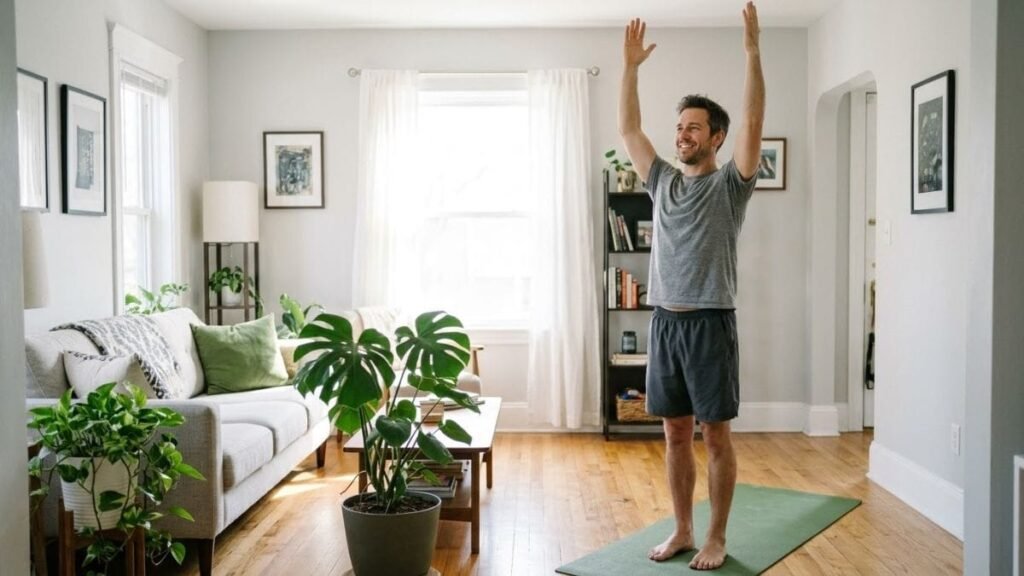
Stand with your feet about shoulder-width apart and your arms slightly away from your sides. Roll your shoulders back and breathe deeply. This pose teaches posture and breath, and it is the starting point for the next two poses.
2. Upward Salute (Urdhva Hastasana)
From mountain pose, reach your arms overhead and stretch from your toes to your fingertips. Tilt your face up to look at your hands if that feels comfortable. Hold for five breaths, then lower your arms slowly.
3. Salutation Seal (Anjali Mudra)
Standing or seated, raise your arms overhead and bring your palms together at the center of your chest. Roll your shoulders back and take a few deep breaths. It is a calm pause between more active poses.
4. Cow Face Pose (Gomukhasana)
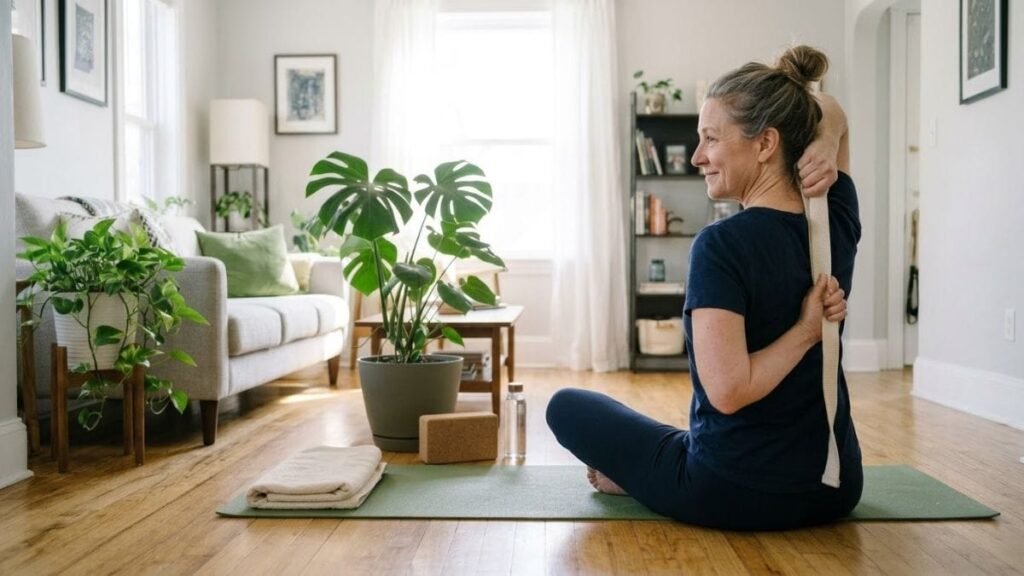
Reach one arm behind your back and the other up and over your head. Try to clasp your fingers, or hold a strap, belt or towel if you cannot reach. Breathe deeply, then switch arms. Go gently if your shoulders feel tight.
5. Cat and Cow Pose (Marjaryasana)
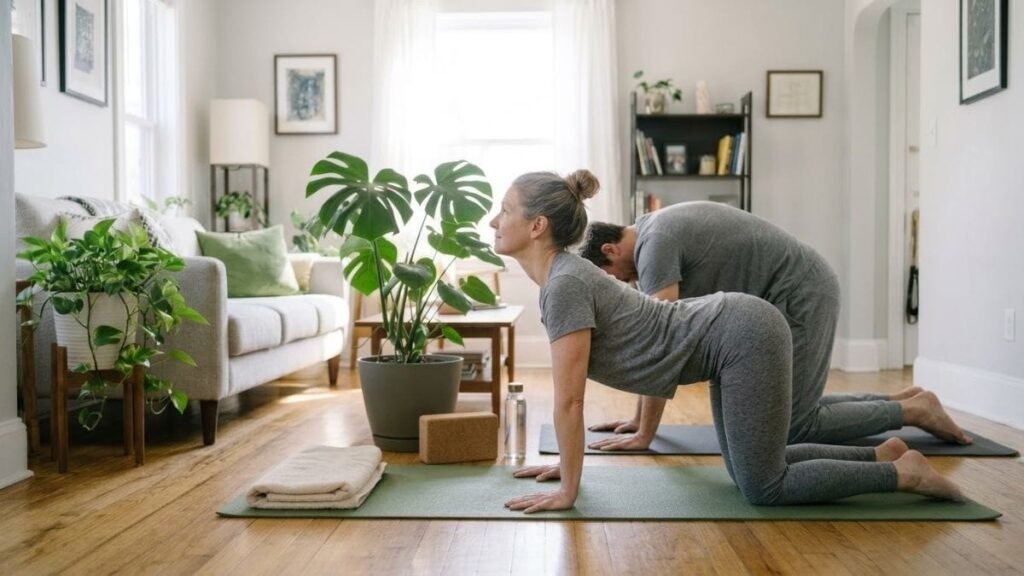
Start on hands and knees with hands under shoulders and knees under hips. Arch your spine upward and let your head hang, then lower your belly and lift your gaze for cow pose. Move slowly between the two.
6. Child’s Pose (Balasana)
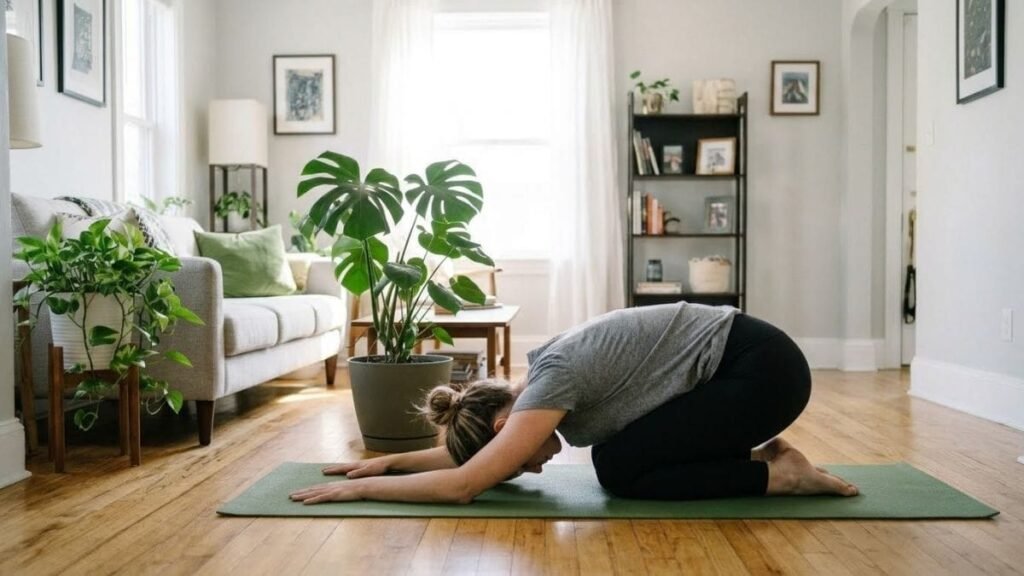
From hands and knees, shift your hips back so your stomach rests on your thighs. Rest your head on the floor and stretch your arms forward. Hold for five breaths. This pose is a good place to rest at any time.
A 15 Minute Sequence for Yoga for Beginners at Home
The table below places the six poses into a short routine. The times are author suggestions, not research-based targets, so adjust them to your comfort and energy.
| Minutes | Pose | Suggested hold |
|---|---|---|
| 0 to 2 | Mountain pose with slow breathing | 5 breaths |
| 2 to 4 | Upward salute, then salutation seal | 5 breaths each |
| 4 to 7 | Cow face pose, both sides | 5 breaths each side |
| 7 to 11 | Cat and cow, slowly | 8 slow rounds |
| 11 to 15 | Child’s pose, then rest | 5 breaths, then 2 minutes |
Begin with the first three rows if 15 minutes feels like too much. Add the rest as you feel steady. Practicing yoga for beginners at home three times a week is a reasonable starting target, and one short session still counts.
How to Make Yoga for Beginners at Home a Habit
A suggested approach for yoga for beginners at home is to attach your sequence to something you already do, such as after your morning coffee or before dinner. Our morning routine ideas guide shows how to place a short movement block in your day, and the habits for health guide lists more starter habits.
If weight loss is your goal, read our yoga for weight loss guide and the can yoga help you lose weight article. This guide is about starting safely, not about burning calories.
Common Mistakes in Yoga for Beginners at Home
A suggested approach is to avoid three errors. The first is forcing a pose to look like a photo. The second is holding your breath, when slow breathing is part of the practice. The third is skipping rest when you feel pain or fatigue.
Another trap is copying advanced videos. Start with beginner classes and modify any pose you cannot do comfortably, as MedlinePlus advises. A strap or towel is a sign of good judgment, not of weakness.
When to Talk to a Professional
Speak with a health care provider before starting if you have a medical condition, an injury or are pregnant. Stop and seek advice if you feel sharp pain, dizziness or numbness. Mayo Clinic says to talk with your provider before starting yoga. This guide is general information and not medical advice.
FAQs
Can I really learn yoga for beginners at home?
You can start at home with gentle poses. The NCCIH notes that practicing under a qualified instructor lowers injury risk and that learning alone has been linked to higher risks. Taking a class or following a qualified teacher first is a sensible step.
How long should a beginner practice yoga each day?
No source reviewed sets an ideal length for beginners. A suggested approach for yoga for beginners at home is 5 to 15 minutes, three times a week, with five breaths per pose. MedlinePlus notes typical classes run 45 to 90 minutes.
What equipment do I need?
A mat or soft surface and a strap, belt or towel are enough, according to Kaiser Permanente. MedlinePlus adds comfortable clothing and water. You do not need special equipment.
Who should check with a doctor before yoga for beginners at home?
MedlinePlus lists people who are pregnant or have high blood pressure, glaucoma, sciatica, arthritis, another health problem or an injury. Ask which poses to avoid before you begin.
Will yoga help my back pain?
The NCCIH says the most research is on low-back pain, with some benefit suggested. In a 2011 trial yoga helped more than a self-care book but not more than stretching. Check with a provider if pain is persistent.
Conclusion
Yoga for beginners at home can be gentle, short and safe if you respect its limits. Use a mat or soft surface, start with the six poses in this guide, hold each for about five breaths and stop if anything hurts. Learn from a qualified teacher when you can, even for a class or two.
Try the 15 minute table this week, three times if possible, and attach it to something you already do. Check with a doctor first if you are pregnant or have a health condition. Treat rest as part of the practice of yoga for beginners at home, and go slowly.