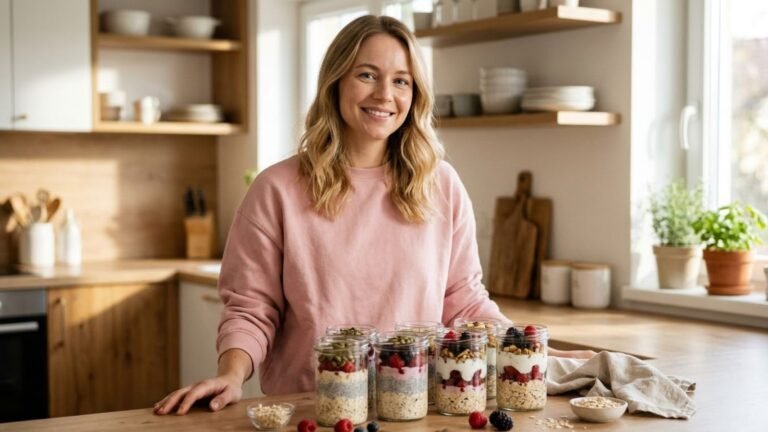

A healthy snacks list is easiest to use when you pick by craving: crunchy, creamy, sweet, salty or filling. The best snacks pair two food groups, such as fruit with nut butter, and are ready when hunger hits.
This healthy snacks list sorts 25 simple options by craving, adds tips from USDA MyPlate, shows how to check labels and notes what the evidence does and does not say. It is general information, not medical advice.
Key Takeaways
- USDA MyPlate suggests combining food groups, such as yogurt with berries, apple with nut butter or whole-grain crackers with turkey and avocado.
- A healthy snacks list works better when snacks are prepped and visible, which MyPlate describes as keeping healthy options handy.
- Check Nutrition Facts for added sugars, sodium and saturated fat. The FDA says 5 percent Daily Value or less is low and 20 percent or more is high.
- Fiber-rich snacks such as raspberries, almonds, pears and air-popped popcorn appear in Mayo Clinic’s high-fiber chart.
- The 25 ideas here are examples. No source tells you which snacks you must eat.
How to Use This Healthy Snacks List
Snacks fill the gap between meals. Whether you need them depends on your hunger, schedule and health. Some people do well without snacking, and others prefer small meals. This healthy snacks list is for people who want ideas, not a rule that you must snack.
The MyPlate healthy snacking tip sheet gives a few simple ideas. It suggests making your own mix from unsalted nuts, seeds, unsweetened cereal, dried fruit and plain popcorn, prepping vegetables ahead, combining food groups and keeping fruits and vegetables where you can see and reach them.
Use those ideas as the base of your healthy snacks list. The 25 snacks below follow them.

Healthy Snacks List for Crunchy Cravings
Crunch comes from raw vegetables, nuts and popcorn.
- Baby carrots or cucumber sticks with hummus. MyPlate suggests raw vegetables with hummus, guacamole or a low-fat yogurt dip.
- Air-popped popcorn. Mayo Clinic’s fiber chart lists 3 cups at about 3.5 grams of fiber.
- A small handful of almonds or pistachios. The same chart lists about 3.5 grams for an ounce of almonds.
- Whole-grain crackers with sliced turkey and avocado, a MyPlate combination.
- Apple slices with a little nut butter.
Healthy Snacks List for Creamy Cravings
- Plain yogurt with berries, which MyPlate gives as a combination.
- Cottage cheese with sliced pear.
- Mashed avocado on whole-grain toast.
- Hummus with whole-wheat pita.
- A banana blended with milk or a fortified alternative into a smoothie. This is an author idea.
Healthy Snacks List for Sweet Cravings
- Fresh fruit such as apples, pears, grapes or bananas, which MyPlate suggests as a quick sweet snack.
- Frozen grapes or berries.
- Plain yogurt with a spoonful of fruit and cinnamon.
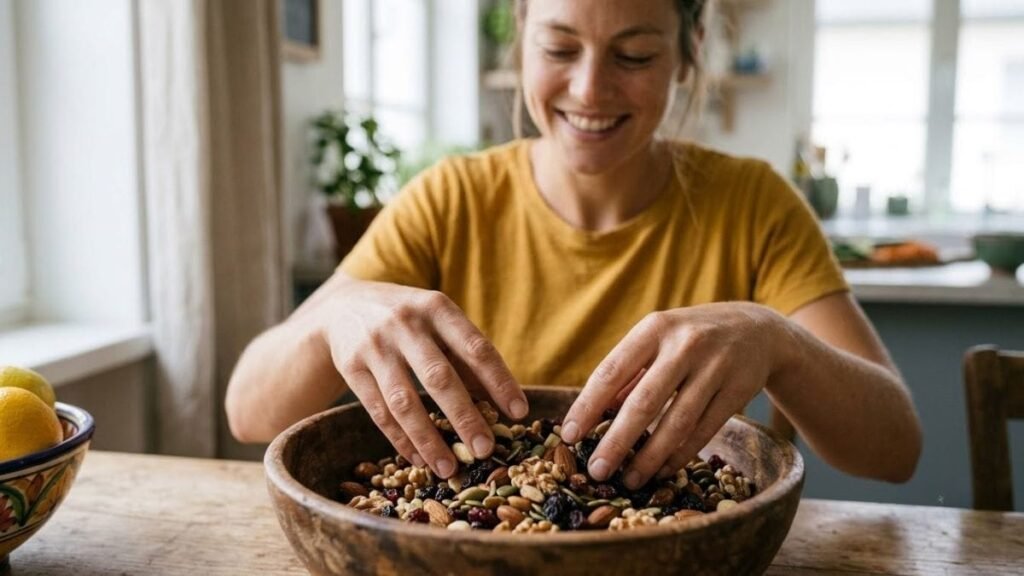
- A small trail mix with unsalted nuts and raisins, using the MyPlate build-your-own idea.
- Dates stuffed with nut butter. Because dried fruit is concentrated, keep portions small. That tip is an author suggestion.
Healthy Snacks List for Salty Cravings
- Unsalted nuts or seeds.
- Roasted chickpeas, homemade with a little oil and spices.
- Whole-grain crackers with cheese.
- A hard-boiled egg with pepper.
- Edamame in the pod with a pinch of salt.
Salty snacks can raise sodium quickly, so check labels. The FDA lists sodium among the nutrients to limit.
Healthy Snacks List for Filling Cravings
When you need something to hold you until the next meal, pair a protein food or fiber with a carbohydrate.
- Oats cooked with milk and topped with fruit.
- Whole-grain toast with peanut butter.
- Black bean and corn salad. Black beans carry about 15 grams of fiber per cup in the Mayo chart.
- Lentil soup in a mug.
- A small turkey and cheese wrap.
Snacks List at a Glance
This table summarizes how the list matches the MyPlate approach.
| Craving | Examples | Why it works |
|---|---|---|
| Crunchy | Carrots and hummus, popcorn, almonds | Vegetables, whole grains and nuts |
| Creamy | Yogurt and berries, avocado toast | Combines dairy or fats with fruit or grains |
| Sweet | Fruit, frozen grapes, small trail mix | Fruit satisfies sweetness |
| Salty | Unsalted nuts, roasted chickpeas, egg | Protein with less sodium when unsalted |
| Filling | Oats, bean salad, lentil soup | Fiber and protein |
Portable Snacks for Work, School and Travel
Some snacks travel better than others. Fruit that has a peel, such as bananas and oranges, needs no container. Nuts, seeds and trail mix pack easily. Whole-grain crackers and individual cheese portions hold up without a cooler.
For items that need to stay cold, such as yogurt or cut vegetables with dips, use an insulated bag with an ice pack. The USDA says perishable food should not stay at room temperature for more than two hours, or one hour above 90 degrees Fahrenheit, so plan accordingly.
For a desk drawer, keep shelf-stable choices such as unsalted nuts, plain popcorn kernels for the microwave, single-serve oatmeal and fruit cups packed in water or juice. These are practical suggestions and not research findings.
How Much Is One Snack?
No source reviewed gives a single right portion. A snack is usually smaller than a meal, and your hunger is a useful guide. The Nutrition Facts label lists a serving size, which you can use as a starting point for packaged foods.
For foods without a label, such as nuts or dried fruit, a small handful is a common rule of thumb. That tip is an author suggestion. If you are managing a health condition, a dietitian can set a portion that fits.
How to Check Labels on Packaged Snacks
Packaged snacks vary widely. The FDA’s label guide says to start with the serving size, since snack bags often hold more than one serving. Then look at added sugars, sodium and saturated fat, which are nutrients to limit, and at fiber, which is a nutrient to get more of.
Use the 5 and 20 percent rule to compare similar items. Our guide to how to read a nutrition label walks through each step.
When you add packaged items to your healthy snacks list, choose those with short ingredient lists, less added sugar and more fiber. This is a consumer tip and not a rule from the FDA.
Make Your Healthy Snacks List Work in Real Life
Idea lists only help if you can act on them. Try these steps:
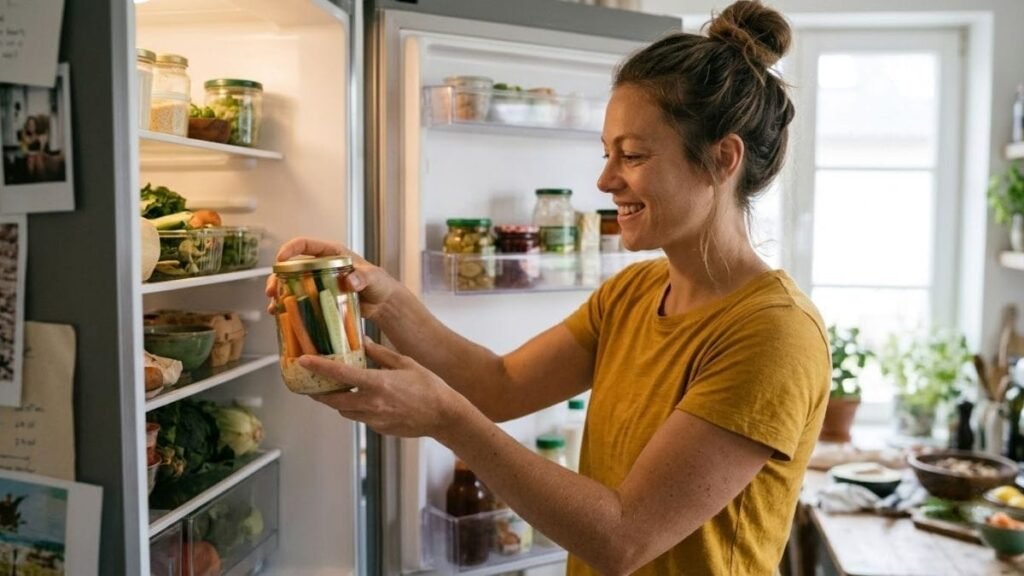
- Prep once a week. Cut vegetables and portion nuts into small containers, as MyPlate suggests.
- Keep fruit in a visible bowl and vegetables at eye level in the refrigerator.
- Pack a snack when you leave home so you are not at the mercy of a vending machine.
- Pair snacks with water. Our guide on how to drink more water can help.
- Add a snack to your shopping list. Our healthy grocery list shows what to stock.
Snack Ideas for Common Diets
Plant-based eaters can lean on hummus, nuts, seeds, fruit, roasted chickpeas and whole-grain crackers. People who avoid dairy can use fortified soy yogurt or swap cheese for nut butter. For nut allergies, choose seeds or other options and read labels carefully, since cross-contact is possible.
These notes are general. The sources reviewed do not cover allergy or diet-specific plans, so ask a clinician or dietitian for advice that fits your needs. A healthy snacks list should always be adapted to the person who uses it.
Common Snacking Mistakes
A few habits can undo good intentions:
- Eating straight from a large bag, which hides how much you have eaten.
- Choosing snacks that are mostly sugar and little else.
- Skipping real meals and filling up on snacks instead.
- Snacking while distracted, so you do not notice fullness.
- Keeping the least healthy options in front and the best ones hidden.
Moving the apple to the front of the counter and the chips to a high shelf is a small change, in line with the MyPlate tip to keep healthy options handy.
Snacks and Health Goals
Snacks can help or hinder depending on what and how much you eat. Many people snack on foods high in added sugar or sodium. A healthy snacks list helps you plan better swaps.
For brain-focused eating, see our post on brain healthy food. For fruit ideas that suit digestion, read our guide to fruits for a healthy intestine and digestive system.
If you have diabetes, kidney disease or another condition, or follow a medical diet, ask a registered dietitian which snacks and portions suit you. No guide can replace that advice.

FAQs
What is a healthy snack?
There is no single definition. MyPlate suggests snacks that combine food groups, such as fruit with yogurt or vegetables with hummus.
What should be on a healthy snacks list for work?
Choose portable foods such as fruit, nuts, yogurt, whole-grain crackers and cut vegetables, and keep them in a bag or desk drawer.
Are dried fruit and nuts healthy snacks?
They can be, but they are concentrated, so keep portions small and choose unsalted nuts and unsweetened dried fruit.
Do I need to snack at all?
No. Snacking is optional. Eat when you are hungry and ask a clinician if you have health concerns.
Conclusion
A healthy snacks list works best when it is organized by craving, built on combinations of food groups and backed by a little prep. USDA MyPlate offers simple ideas, and Nutrition Facts labels help you compare packaged choices.
The evidence has limits. The MyPlate and FDA advice is official guidance.
But the 25 ideas here are examples chosen by the author, and no source shows that any one snack is best for everyone. Your next step is easy. Pick five snacks from this healthy snacks list, prep two this week and see which ones you actually eat. Then drop the rest and keep what works.