
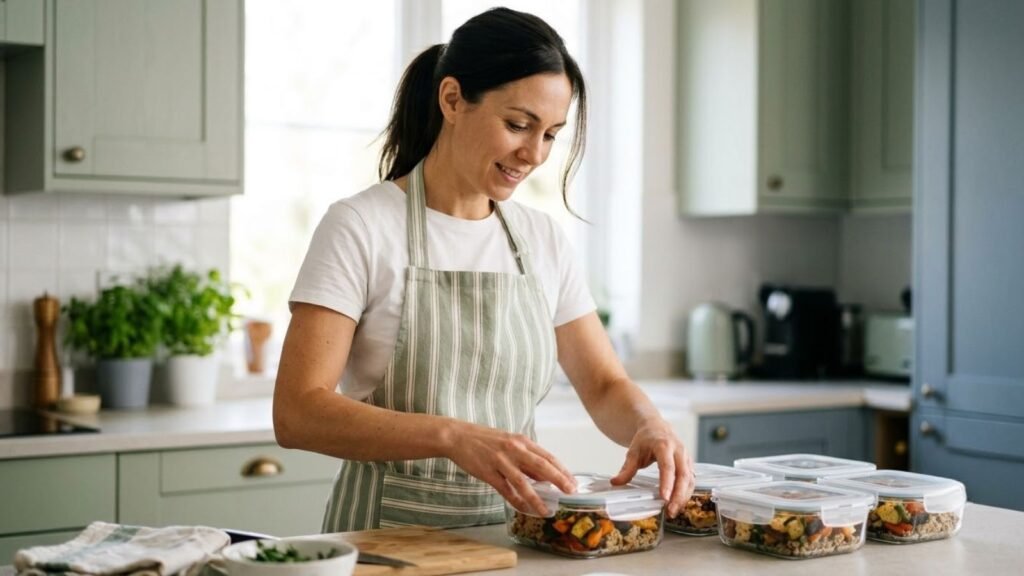
Meal prep for beginners works best when you start small: pick two or three meals, cook one batch of grains and one of protein, wash and cut vegetables, and store everything safely. About one hour a week is enough to begin.
This guide to meal prep for beginners gives a simple weekly plan, a shopping and storage checklist, and food safety rules from the USDA so your prepped meals stay safe. It is general information, not medical advice.
Key Takeaways
- Meal prep for beginners can start with one hour a week and two or three meals, not a full week of every meal.
- The USDA says to refrigerate leftovers within two hours and use them within three to four days.
- Divide large batches into shallow containers so food cools quickly, and reheat leftovers to 165 degrees Fahrenheit.
- Frozen leftovers stay safe indefinitely but are best within three to four months, according to the USDA.
- A short list tied to your planned meals, as USDA MyPlate suggests, keeps meal prep simple and cheap.
What Meal Prep for Beginners Means
Meal prep is cooking or preparing parts of meals ahead of time so weeknights are easier. For some people it means full portioned meals. For others it means washing vegetables, cooking a pot of grains and boiling eggs.
Meal prep for beginners should be flexible. You do not need a new set of containers, a full Sunday or a rigid plan. The goal is fewer last-minute decisions.
The method below is an author plan, built on public food safety rules and MyPlate shopping tips. No research reviewed here proves that meal prep improves health, so treat it as a practical tool.
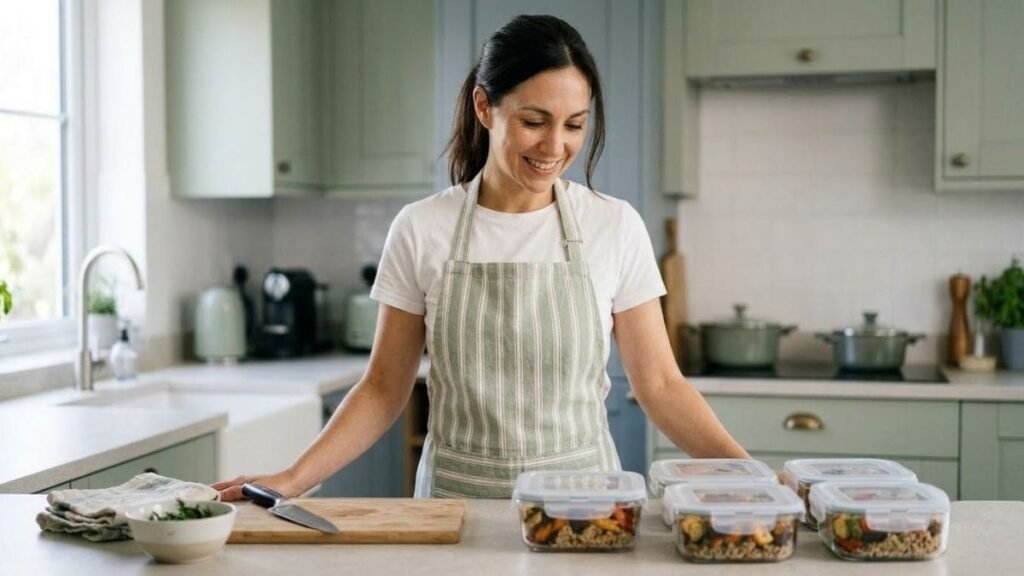
Before You Start Meal Prep for Beginners
Spend ten minutes on planning. USDA MyPlate recommends checking your refrigerator, freezer and pantry first, then writing down meals for the week and shopping for what is missing.
For meal prep for beginners, choose two or three meals you like and that reheat well, such as bean chili, grain bowls or baked chicken with vegetables. Keep the first week easy and your list short.
Make a list from your meals, not from random items. Our healthy grocery list can help you sort items by food group, and our guide on how to eat healthy on a budget offers ways to save.
The One-Hour Weekly Plan
Follow these five steps. Times are rough estimates and depend on your kitchen.
Step 1: Pick your base (5 minutes)
Choose one grain such as rice, quinoa or whole-wheat pasta, one protein such as beans, eggs or chicken, and two or three vegetables. This is the core of meal prep for beginners.
Step 2: Start the slowest item first (10 minutes)
Put grains on the stove or a tray of vegetables in the oven. Items that need a long cook go first, so others can finish while they run.
Step 3: Cook the protein (15 minutes)
Bake chicken, simmer beans or boil eggs. The USDA says poultry should reach 165 degrees Fahrenheit, ground meats 160 and whole cuts of beef, pork, lamb and veal 145 followed by three minutes of rest.
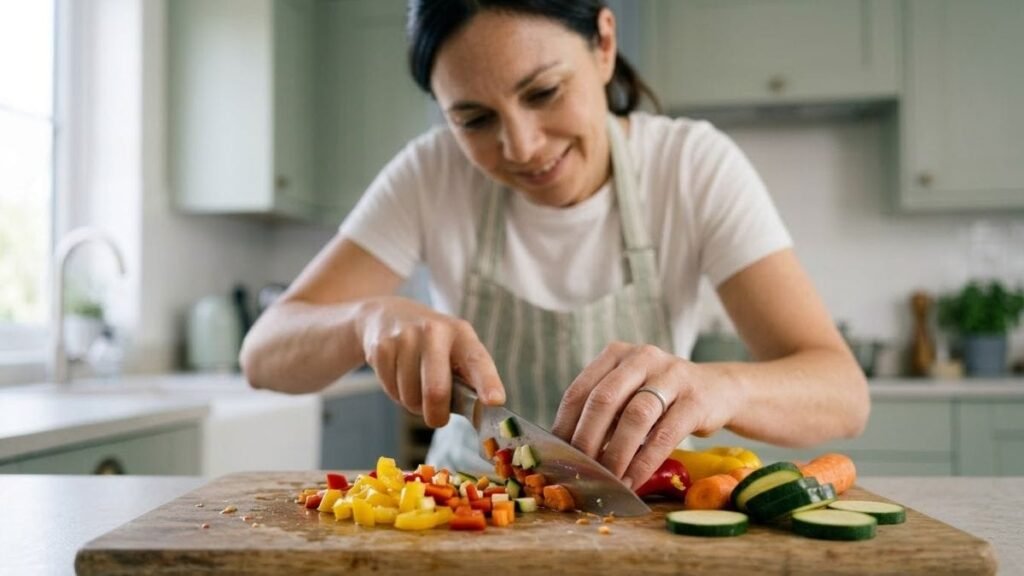
Step 4: Wash and cut raw vegetables and fruit (15 minutes)
MyPlate’s snacking tips suggest cutting up fresh vegetables and portioning them in reusable containers so they are ready to grab.
Step 5: Cool, portion and store (15 minutes)
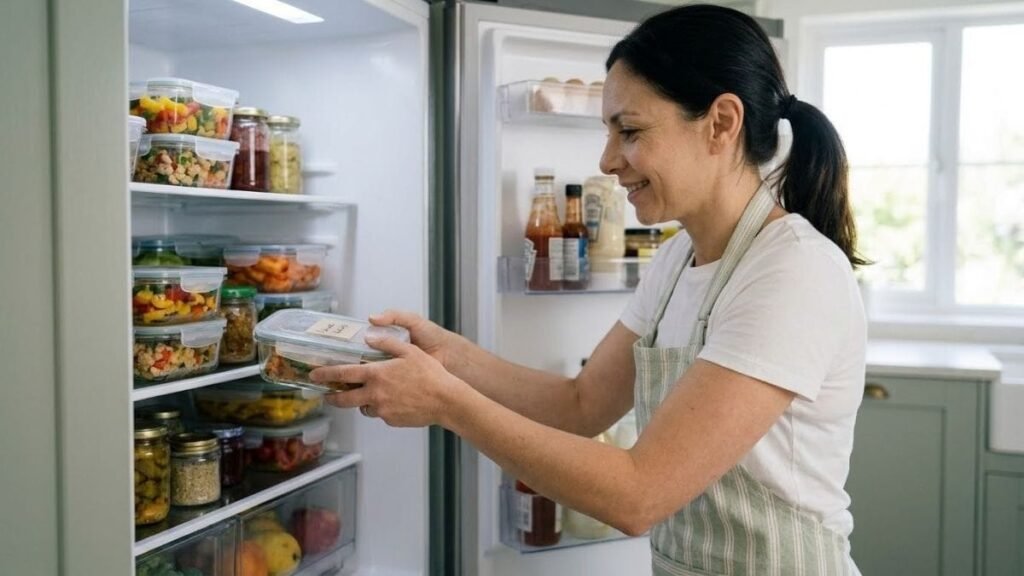
Divide food into shallow containers so it cools quickly, as the USDA advises, and get it into the refrigerator within two hours. Label containers with the date if you can.
Food Safety Rules for Meal Prep for Beginners
Food safety is the part of meal prep for beginners that matters most. The USDA Food Safety and Inspection Service gives these basics:
- Bacteria grow fast between 40 and 140 degrees Fahrenheit, the danger zone.
- Refrigerate perishable food within two hours, or one hour if the room is above 90 degrees.
- Divide large amounts into shallow containers and cut large pieces into smaller portions.
- Refrigerate leftovers for three to four days.
- Freeze what you will not eat in that window. Frozen leftovers are safe indefinitely but best within three to four months.
- Reheat leftovers to 165 degrees Fahrenheit and bring soups, sauces and gravies to a vigorous boil.
The page is last updated July 31, 2020, so check it for any later change. A common summary is to prep for three to four days at a time, with later meals going to the freezer.
How to Plan Your Week
A week of meal prep for beginners might look like this. The plan is an illustration.
| Day | Plan |
|---|---|
| Sunday | Prep session, cook grains, protein and vegetables |
| Monday to Wednesday | Eat refrigerated meals |
| Thursday | Use up leftovers or thaw a frozen portion |
| Friday to Saturday | Eat fresh or from the freezer |
This fits the USDA three-to-four-day rule. Freeze portions on day one if you want them for later in the week.
Easy Meal Prep for Beginners Ideas
These ideas reheat well and use cheap staples. They are examples, not tested recipes.
- Grain bowls: cooked rice or quinoa, beans or chicken, roasted vegetables and a simple sauce.
- Bean chili or lentil soup: freeze half for later. Mayo Clinic’s fiber chart shows lentils and black beans among the highest-fiber foods.
- Egg muffins or boiled eggs for breakfast.
- Overnight oats in jars. Our upcoming guide to healthy breakfast ideas for meal prep will cover this.
- Chopped vegetables with hummus for snacks, following the MyPlate snack tips.
A Sample Shopping List for One Prep Session
This list serves two people for about three days. Scale it up or down. It is an illustration based on the plan above.
- Grain: one bag of brown rice or quinoa.
- Protein: a dozen eggs, a can of beans or a pack of chicken.
- Vegetables: broccoli, carrots, peppers or frozen mixes.
- Fruit: bananas or apples for snacks.
- Flavor: garlic, a lemon, olive oil and a spice you like.
Check what you already own first. A short list keeps meal prep for beginners cheap and avoids buying items that will go bad.
Why Many Beginners Quit, and How to Avoid It
Beginners often try to prep every meal for a week on day one. By Wednesday the food is boring and the fridge is full. Keep the first month small.
Rotate two or three recipes and change the sauce. Allow one night for take-out or a fresh meal. Meal prep for beginners works because it saves effort, not because it is perfect. These points are author suggestions.
Equipment You Actually Need
You can start with what you own. A few shallow containers with lids, a sheet pan, a large pot and a good knife are enough. Reusable containers with a tight seal help keep food fresh. Glass is easy to reheat in, but plastic works too if it is labeled microwave safe.
Do not buy a full set before you know what you like. Meal prep for beginners works with simple tools.
Thawing and Reheating Prepped Meals
The USDA says you can thaw frozen leftovers in the refrigerator, in cold water or in the microwave. Food thawed in the refrigerator should be eaten within three to four days or refrozen. Food thawed in cold water should be cooked before it is refrozen.
Frozen leftovers can also be reheated without thawing. Always heat to 165 degrees Fahrenheit, and stir soups and sauces so heat spreads evenly. Food reheated to that temperature can be refrozen safely, the USDA adds.
Troubleshooting Common Problems
- Food gets boring: change sauces and spices through the week instead of cooking everything the same way.
- Vegetables get soggy: store them raw and cook or reheat them near the time you eat, or add dressings separately.
- Too much food: freeze portions on the first day.
- Not enough time: prep only the base items. Even cooked grains and cut vegetables help.
These are practical suggestions, not research findings.
When Meal Prep for Beginners May Not Fit
Meal prep may not suit very small kitchens, people who dislike leftovers or schedules that change daily. In those cases, prep ingredients only, such as washed greens and cooked grains.
If you are pregnant, older, have a weakened immune system or are cooking for someone who does, food safety rules matter even more. Ask your clinician for guidance. This guide does not replace personal advice.
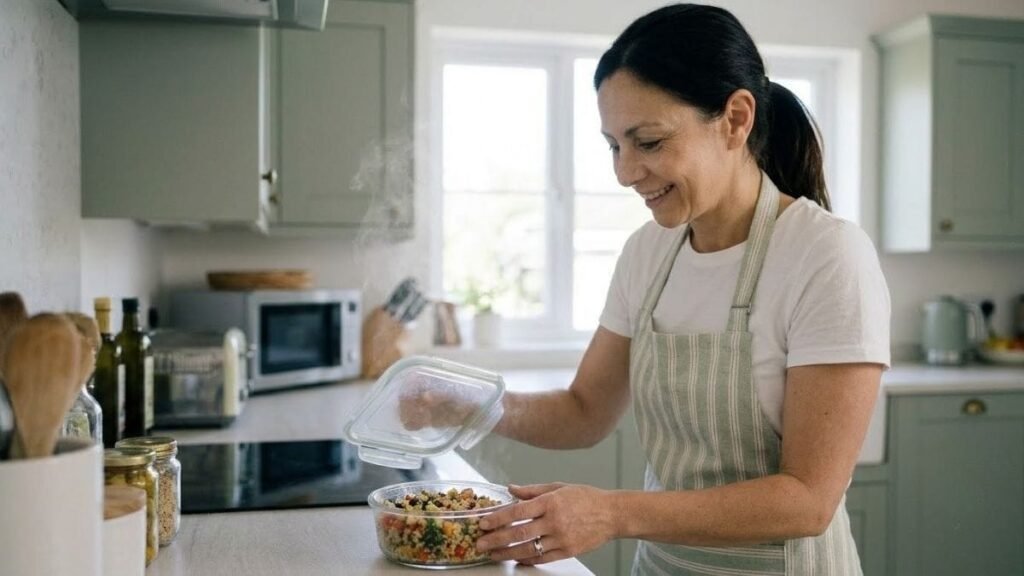
Keep It Going
Repeat the plan for three weeks before changing anything. Add one new meal at a time. For daily habit ideas, see our post on seven easy tips for a healthy lifestyle and our article on brain healthy food.
FAQs
How long does meal prep for beginners take?
About one hour for a small first batch. It can take more or less depending on your kitchen and recipes.
How long can prepped meals stay in the refrigerator?
The USDA says three to four days. Freeze meals you will not eat in that time.
Can I freeze prepped meals?
Yes. Frozen leftovers stay safe indefinitely according to the USDA, but are best within three to four months.
How do I reheat prepped meals safely?
Heat them to 165 degrees Fahrenheit. Bring soups, sauces and gravies to a vigorous boil.
Conclusion
Meal prep for beginners is a small weekly routine that saves effort without demanding perfection: pick two or three meals, cook a base, cut vegetables, portion into shallow containers and keep to the USDA’s three-to-four-day refrigerator rule. Freezing extends what you can prepare, and a flexible plan beats a perfect one. Start small, stay safe and build from there.
The evidence has limits.
The safety rules come from the USDA, but the weekly plan and recipe ideas are author suggestions, and no source reviewed shows that meal prep changes health. Your next step is easy. Choose two meals, write your list and set aside one hour this week.