A home workout without equipment can meet national activity guidelines using only your body weight, a clear floor and about 20 minutes. This guide gives six moves with easier versions, a weekly plan and the safety limits that health sources recommend.
Key Takeaways
- A home workout without equipment can cover the strength half of the CDC guideline, which asks for muscle-strengthening on at least 2 days a week.
- The CDC also recommends 150 minutes a week of moderate activity, and says you can spread it across the week in smaller chunks.
- Mayo Clinic advises a 5 to 10 minute warm-up, 12 to 15 repetitions to fatigue, and rest days between sessions for the same muscle group.
- A firefighter study linked more push-ups to lower heart disease risk, but it covered men only and does not show push-ups cause the benefit.
- A suggested approach: start with the easier version of each move, do one round, and add rounds slowly as it gets easy.
What a Home Workout Without Equipment Can and Cannot Do
The CDC adult guidelines recommend 150 minutes a week of moderate-intensity activity, or 75 minutes of vigorous activity, plus muscle-strengthening on at least 2 days a week. Strengthening should work legs, hips, back, abdomen, chest, shoulders and arms. Bodyweight moves can cover that second part.
The World Health Organization 2020 guidelines also recommend regular muscle strengthening and note that some activity is better than none. A workout at home does not need machines to count, but progress slows once moves feel easy, and then you add reps, rounds or harder versions.
Safety Before You Start a Home Workout Without Equipment
Mayo Clinic advises learning proper form before adding load, warming up for 5 to 10 minutes with cardio, and stopping if something hurts. If you have a medical condition, an injury or have been inactive for a long time, ask a doctor what is safe for you first.
A suggested approach: clear a space about the size of a yoga mat, wear supportive shoes on hard floors and keep water nearby. Stop any move in your home workout without equipment that causes sharp pain, dizziness or numbness. Treat a bit of muscle tiredness as normal and pain as a signal to stop.
6 Moves for a Home Workout Without Equipment
These moves are common bodyweight exercises. The instructions and easier versions below are author suggestions, not findings from a study. Learn the easier version first, and keep your breathing steady throughout.
1. Bodyweight Squat
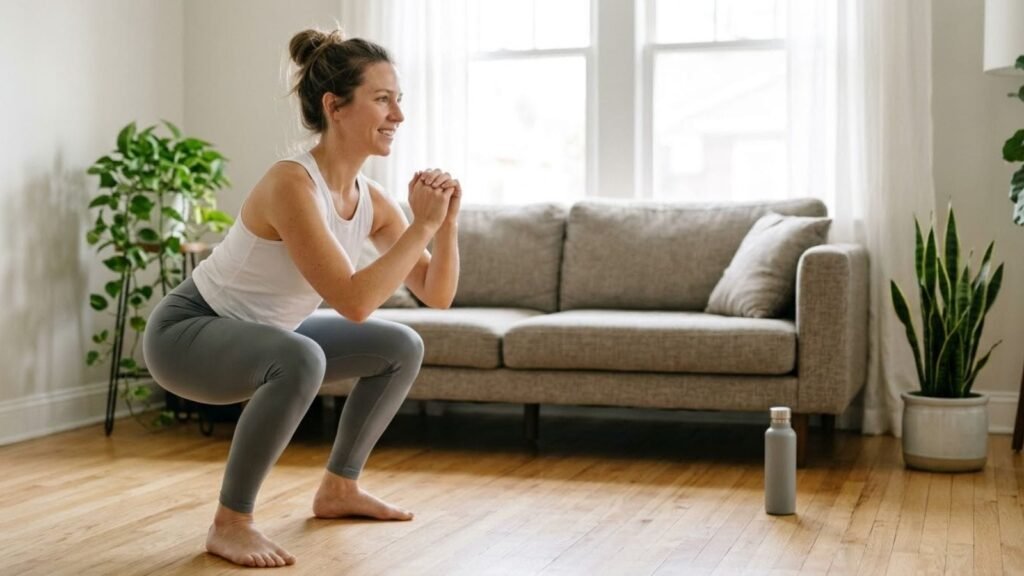
Stand with feet shoulder-width apart, push your hips back and bend your knees as if sitting in a chair, then stand up. Easier version: squat to a chair and stand. Aim for 10 to 15 repetitions.
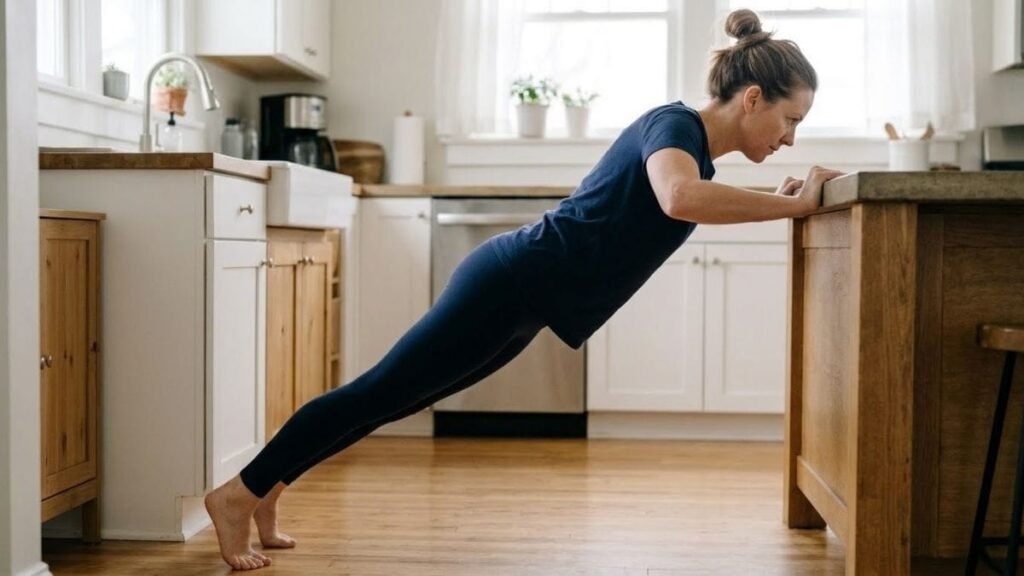
2. Incline or Wall Push-Up
Place hands on a wall, counter or sturdy table, keep your body in a straight line and lower your chest toward it. Lower the surface as you get stronger until you can use the floor. Aim for 8 to 12 repetitions.
3. Reverse Lunge
Step one foot back, lower until both knees bend, then push through the front foot to stand. Hold a wall or chair if balance is a problem. Aim for 8 repetitions on each leg, and keep your front knee over your ankle.
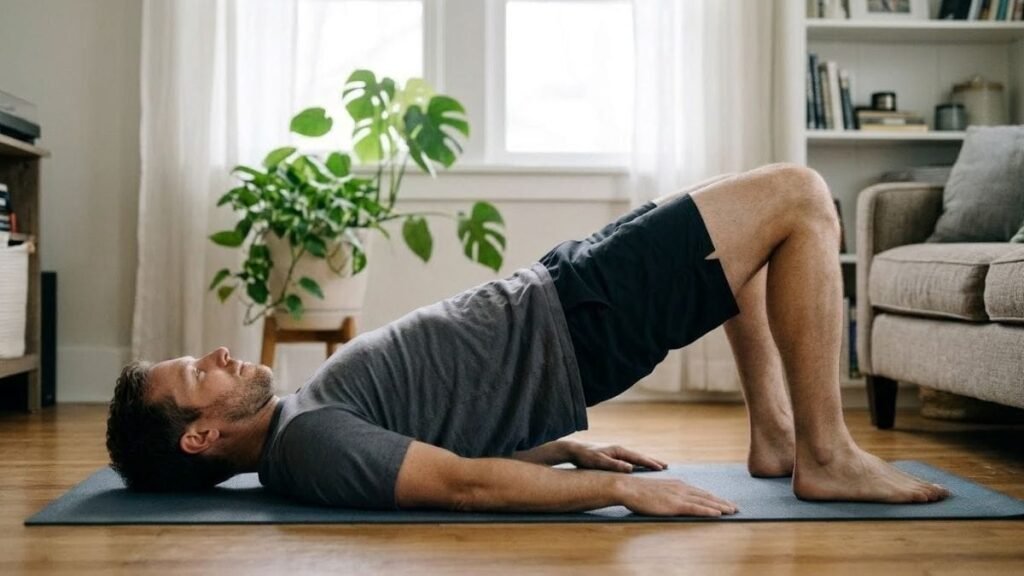
4. Glute Bridge
Lie on your back with knees bent and feet flat, then lift your hips until your body forms a line from shoulders to knees. Pause, then lower slowly. Aim for 10 to 15 repetitions.
5. Forearm Plank
Rest on your forearms and toes, keep your body straight and hold. Easier version: drop to your knees. Hold for 15 to 30 seconds and rest. Stop if your lower back sags or hurts.
6. Marching in Place
Lift your knees in a brisk march while swinging your arms. This is the lowest-impact cardio option and works as your warm-up or a recovery between strength moves. Progress to jumping jacks only if your joints feel fine.
Between moves, rest for 30 to 60 seconds and sip water. A suggested approach for a home workout without equipment is to count slowly and stop two repetitions before your form breaks. Finishing feeling tired but steady is a better sign than finishing exhausted.
A Simple Weekly Plan for a Home Workout Without Equipment
Mayo Clinic advises about 12 to 15 repetitions that fatigue the muscle, about twice a week, and not training the same muscle group on consecutive days. The plan below follows that spirit. The days, rounds and times are author suggestions.
| Day | Session | Suggested time |
|---|---|---|
| Monday | Warm-up march, then 2 rounds of all six moves | 20 minutes |
| Tuesday | Brisk walk or light movement | 15 to 30 minutes |
| Wednesday | Rest or gentle stretching | As you like |
| Thursday | Warm-up march, then 2 rounds of all six moves | 20 minutes |
| Friday | Brisk walk or light movement | 15 to 30 minutes |
| Weekend | One longer walk or an active outing | 30 to 45 minutes |
This pattern gives two strength days and several short bouts of moderate activity. It is a starting point, so move days around and drop to one round whenever you feel tired.
How to Progress a Home Workout Without Equipment
Mayo Clinic advises starting light and increasing gradually, and moving up when repetitions become easy. Without weights, you progress by changing the move instead. Add a repetition or a round, slow the lowering phase, pause at the hardest point or choose a harder version.
A suggested approach: change only one thing at a time, and repeat the new level for at least two weeks. For example, move from a wall push-up to a counter push-up, then to a lower surface. Gradual steps lower the chance of overuse pain and keep a home workout without equipment enjoyable.
What the Push-Up Study Does and Does Not Show
A 2019 study of 1,104 Indiana firefighters, described by the Cooper Institute, found that men who could do more than 40 push-ups had a nearly 90 percent lower risk of a cardiovascular event over about 10 years. There were only 37 events in total.
The group was all male, and the best performers also had better risk factors such as not smoking. The authors did not claim that push-up performance is an independent risk factor. So it is an association, and no reason to chase high numbers.
How to Keep a Home Workout Without Equipment Going
A suggested approach: schedule the sessions like appointments and attach them to something you already do. Our how to build habits that stick guide explains cues and missed-day plans, and the habits for health guide lists more starter habits.
Short bouts count. The American College of Cardiology summary of the 2018 US guidelines says even short episodes of activity are beneficial. If you only have ten minutes, do one round and stop. Our morning routine ideas guide shows where a short session can fit.
Common Mistakes With a Home Workout Without Equipment
A suggested approach is to avoid three errors. The first is skipping the warm-up, which Mayo Clinic advises before every session. The second is rushing reps with poor form. The third is doing the same hard session every day.
Another trap is never progressing. When 12 to 15 repetitions feel easy, add a round, slow the lowering phase or move to a harder version. A home workout without equipment improves when the challenge rises a little, and it stays safe when the rise is small.
A last mistake is comparing yourself with fitness videos. Those routines are built for people with years of practice. Your home workout without equipment only has to be repeatable, and a plain version done every week beats an impressive one done once.
When to Talk to a Professional
Speak with a doctor before starting if you have a chronic condition, an injury, chest pain, dizziness or have been inactive for a long time. A trainer or physical therapist can check your form. This guide is general information and not medical advice.
FAQs
Can a home workout without equipment build muscle?
Bodyweight moves can build strength, especially for beginners, and the CDC says muscle strengthening can include these activities. Progress slows when moves get easy, so add repetitions, rounds or harder versions over time.
How often should I do a home workout without equipment?
The CDC recommends muscle strengthening on at least 2 days a week. Mayo Clinic advises not working the same muscle group on consecutive days. A suggested approach for a home workout without equipment is two strength days and some walking in between.
How long should a workout at home be?
No source sets a required length for each session. The CDC says activity can be spread across the week in smaller chunks, so 10 to 20 minutes can count. Longer sessions are optional.
Do I need to warm up?
Mayo Clinic advises 5 to 10 minutes of cardio before strength work. A brisk march in place is a suitable warm-up for a home workout without equipment.
Is a home workout without equipment safe for beginners?
Most healthy adults can start gently, but check with a doctor first if you have a condition, an injury or have been inactive. Choose easier versions, stop if you feel pain and build slowly.
Conclusion
A home workout without equipment can fit real life: six moves, easier versions, two strength days a week and short walks in between, all built on the CDC guideline. Warm up first, use proper form, rest between sessions and stop if anything hurts or feels wrong.
Try the plan for two weeks before changing it. Start with one round if two feels hard, and add a round when the moves become easy. Speak with a doctor first if you have a health condition, and remember that short bouts still count. Consistency over several weeks matters more than any single hard session.