

If you are searching for foods that help with anxiety, you are probably hoping that something on your plate can settle a racing mind. Some of the foods that help with anxiety are worth eating for this reason, and a nutritional psychiatrist at Harvard has outlined several.
The evidence, though, is early: much of it comes from animal studies, small groups and correlations, and the same expert says diet is not a substitute for other treatments. This guide lists nine food choices, explains how far the research goes, and says when to get help instead. It is general information, not medical advice.
Key Takeaways
- A Harvard Health post by nutritional psychiatrist Uma Naidoo describes the evidence on diet and anxiety as growing but not yet conclusive.
- Foods that help with anxiety, as named in that post, include leafy greens, nuts and seeds for magnesium, fatty fish for omega-3s, and probiotic foods such as kefir and sauerkraut.
- Steady blood sugar matters: skipping meals can cause jitteriness that may worsen anxiety.
- Limiting alcohol and caffeine is part of the advice.
- See a doctor if anxiety is severe or lasts more than two weeks, because food may complement treatment but does not replace it.
What the Research on Diet and Anxiety Actually Shows
Before the list, a fair summary. In a Harvard Health post on nutritional strategies to ease anxiety, Dr. Uma Naidoo of Massachusetts General Hospital and Harvard Medical School writes that much of the support comes from animal studies, small or specific-population studies, and correlations.

She says more research is needed and describes the evidence as growing but not yet conclusive. The post was published in 2016 and last modified in 2019, so newer findings may not be included.
That does not mean eating well is pointless. A balanced diet supports sleep, energy and mood, and none of the foods that help with anxiety below carry unusual risks for most people. It does mean that no plate of food should be sold as a cure, and that this is a supporting role, not a lead.
9 Foods That Help With Anxiety and Why
The table sums up each food group, the nutrient behind it and how strong the claim is in the source.
| Food | Nutrient or idea | Strength of support in the source |
| Leafy greens (spinach, Swiss chard) | Magnesium | Based on a mouse study |
| Nuts, seeds, legumes, whole grains | Magnesium | Same mouse finding |
| Oysters, cashews, beef, egg yolks | Zinc | Linked to lower anxiety |
| Fatty fish (wild salmon) | Omega-3 fats | A 2011 supplement study in medical students |
| Pickles, sauerkraut, kefir | Probiotics | A Psychiatry Research study on social anxiety |
| Avocado and almonds | B vitamins | Listed as a source |
| Beans, berries, walnuts, kale | Antioxidants | Anxiety correlated with lower antioxidant status |
| Turmeric and ginger | Curcumin and antioxidants | Named as spices with antioxidant properties |
| Whole grains, vegetables, fruit | Complex carbohydrates | Slower digestion supports steadier blood sugar |
Magnesium Foods
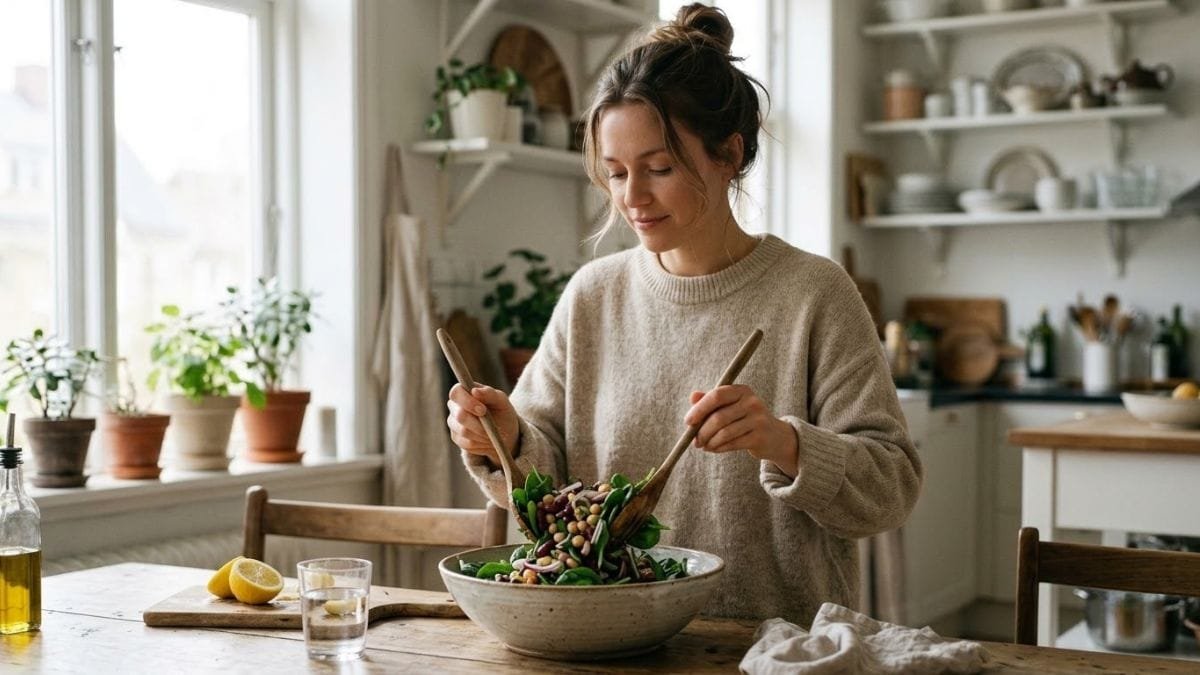
Naidoo lists leafy greens such as spinach and Swiss chard, legumes, nuts, seeds and whole grains as magnesium sources, and says the link to anxiety rests on a mouse study showing that low magnesium increased anxiety-like behavior. Mouse findings are a reason for interest, not a guarantee in people.
Zinc and Omega-3 Foods
Oysters, cashews, liver, beef and egg yolks are named as zinc sources linked with lower anxiety. For omega-3s, the post cites a 2011 study of medical students, which used supplements, as one of the first to suggest a benefit.
The Mayo Clinic’s Mediterranean diet guide describes fatty fish such as salmon, sardines and mackerel as omega-3 sources and recommends them two to three times a week, with low-mercury choices for children and pregnant or breastfeeding people.
Probiotic Foods
The post links pickles, sauerkraut and kefir to fewer social anxiety symptoms in a Psychiatry Research study and notes that about 95 percent of serotonin receptors are in the gut lining. Probiotics are being studied for anxiety and depression, and Naidoo presents this as a research direction, not an established treatment.
Antioxidant Foods and Spices
She notes that anxiety is correlated with lower total antioxidant status, so antioxidant-rich foods may help. The USDA high-antioxidant foods named include pinto and black beans, apples, prunes, cherries, plums, berries, walnuts, pecans, artichokes, kale, spinach, beets and broccoli. Turmeric and ginger are named as spices with antioxidant and anti-anxiety properties.
Best Foods for Anxiety: Think in Patterns, Not Single Items
The best foods for anxiety in the sources are not exotic, and the same is true of most foods that help with anxiety. They are everyday vegetables, legumes, nuts, fish and whole grains, and they overlap almost entirely with the Mediterranean pattern.

A sensible week might include fish twice, a serving of beans most days, leafy greens daily, a handful of nuts, and kefir or yogurt a few times.
If that sounds like the guidance for heart health or brain health, it is, which is part of its appeal. You can read how the same pattern shows up in BitComfy’s guide to brain healthy foods.
Diet for Anxiety: Habits That Matter as Much as Foods
Naidoo’s general advice goes beyond specific foods. She recommends a balanced diet, staying hydrated, and limiting or avoiding alcohol and caffeine.
Complex carbohydrates such as whole grains, vegetables and fruit digest more slowly than processed simple carbs, which helps keep blood sugar steadier and may help you feel calmer. She also advises not skipping meals, since blood sugar drops can cause jitteriness that may make anxiety worse.
These are small changes, and many people find the meal rhythm easiest to fix. Eating at regular times, with some protein and fiber at each meal, is a practical way to avoid the crash that feels like worry.
A Sample Day of Foods That Help With Anxiety
Here is how the sources translate into a day, built from foods in the Harvard post and the Mediterranean pattern. Breakfast could be oatmeal with berries and walnuts. Lunch could be a bean and spinach salad with olive oil.
A snack of almonds or an apple covers magnesium and fiber. Dinner could be salmon with broccoli and brown rice, and kefir or yogurt can fit in at any meal.
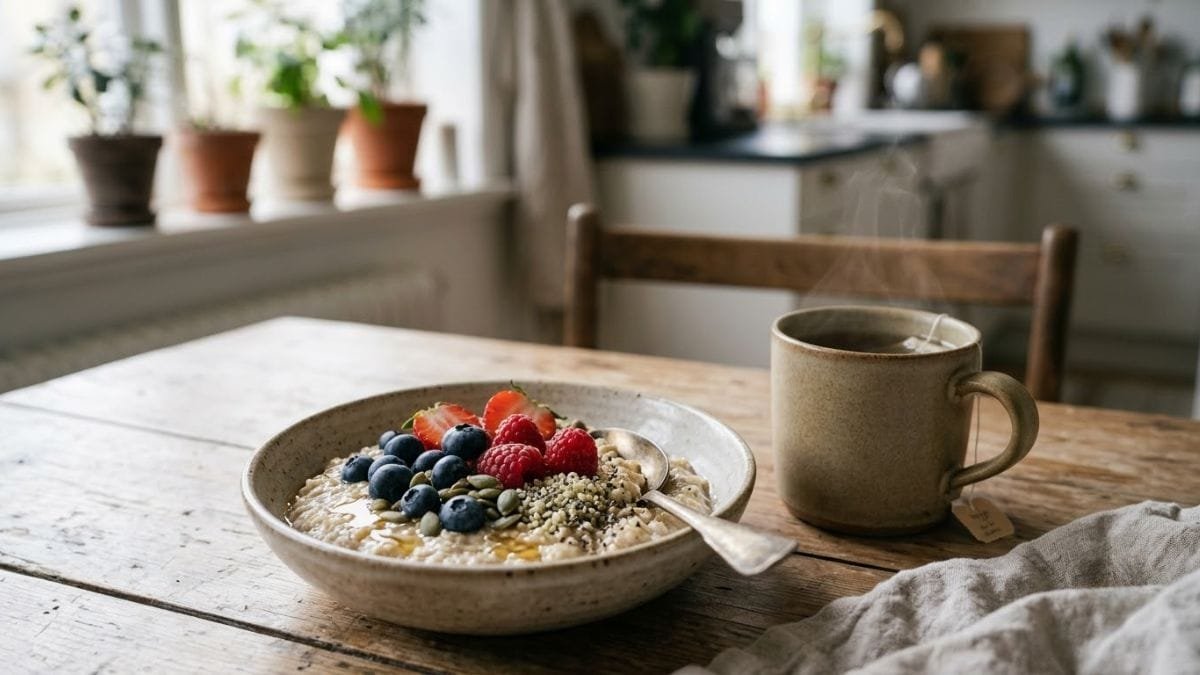
Eating at regular times, rather than the specific menu, is the main point, because skipped meals can worsen jitteriness. Treat this as an example of foods that help with anxiety, not a prescription.
Foods That Calm Anxiety: What About Chamomile?
Chamomile tea is a favorite on lists of foods that calm anxiety, so check what the authorities say. The National Center for Complementary and Integrative Health (NCCIH) says in its chamomile overview that studies have not produced enough reliable evidence to rate chamomile’s usefulness for specific conditions.
Preliminary studies suggest a chamomile dietary supplement might help generalized anxiety disorder and associated depression, but that is a supplement, not a cup of tea.
Safety is worth knowing too. NCCIH says chamomile is likely safe orally in amounts found in teas and foods, but side effects can include nausea, dizziness and allergic reactions.
People allergic to ragweed, chrysanthemums, marigolds or daisies are more likely to react. Chamomile has interacted with the blood thinner warfarin and might interact with sedatives, so check with a health care provider if you take medicines.
Foods That Reduce Anxiety Versus Foods That Make It Worse
As stated by growing study, there may be a strong connection between the healthy bacteria in your gut and psychological health. Your brain sends signals to a gut that’s why when you’re stressed, you might have stomach aches. However, the reverse may be true also. Yogurt contains healthy probiotics that help maintain healthy bacteria in your gut.
Keeping a balanced diet will help keep your stress levels in check, and eating these foods regularly may also help keep you calm more time.
When Food Is Not Enough
Anxiety is a health condition, not a menu problem, and foods that help with anxiety are only one support. Naidoo says diet may complement medication or therapy but is not a substitute, and advises talking to a doctor if anxiety is severe or lasts more than two weeks.
If you are having thoughts of harming yourself, seek urgent help from local emergency services or a crisis line in your country.
FAQs
What are the best foods that help with anxiety?
The Harvard post names leafy greens, nuts, seeds, legumes, fatty fish, probiotic foods, antioxidant-rich fruits and vegetables, and spices such as turmeric and ginger. It calls the evidence growing but not conclusive.
Can diet cure anxiety?
No. Naidoo says diet is not a substitute for other treatments, though it may complement medication or therapy.
Does chamomile tea reduce anxiety?
NCCIH says reliable evidence is lacking for specific conditions. Preliminary studies suggest a chamomile supplement might help generalized anxiety disorder, but tea has not been shown to do so.
Should I avoid caffeine if I feel anxious?
Naidoo advises limiting or avoiding alcohol and caffeine. Caffeine can also disrupt sleep, which can worsen anxiety.
When should I see a doctor about anxiety?
If anxiety is severe or lasts more than two weeks, according to the Harvard post.
Conclusion
The foods that help with anxiety are ordinary ones: leafy greens, nuts, legumes, fish, whole grains, fermented foods and colorful fruit, eaten at regular times and with less alcohol and caffeine. The evidence is early and partly based on animal studies, so treat food as a supportive habit and not a treatment.
Chamomile tea is pleasant but unproven, and it carries allergy and drug interaction cautions. If anxiety is severe or lasts more than two weeks, talk to a doctor. Your next step is to plan three regular meals tomorrow, each with a vegetable or legume and a source of protein, and to note how your body feels by evening.