

Most home remedies for dry hair start in the kitchen and end in a mess, yet only a few change anything you can feel. Dry, rough, frizzy hair is usually a mix of too much heat, harsh handling and too little conditioner, so the best fixes tend to be habits first and ingredients second.
This guide shows eight remedies that hold up against dermatology advice and one lab study, explains how to make a simple mask, and flags when dryness needs a professional. It is general information, not medical advice.
Key Takeaways
- The best home remedies for dry hair start with habits. The American Academy of Dermatology says dry, curly or thick hair may only need shampooing every 2 to 3 weeks, and that shampoo belongs on the scalp, not the lengths.
- Conditioner goes on the full length of dry or curly hair, and on the ends only for fine, straight hair.
- In a 2003 lab study, coconut oil was the only one of three oils that reduced protein loss in hair, but it was a narrow test, not proof for every head of hair.
- Heat tools, tight styles, rubbing with a towel and frequent chemical treatments are the habits most likely to damage hair.
- Persistent thinning or scalp problems call for a board-certified dermatologist, not another mask.
Why Hair Gets Dry in the First Place
Hair is dead protein once it leaves the scalp, so it cannot repair itself the way skin can. Dryness is what you see when the outer layer gets rough, moisture escapes and strands snag on each other.
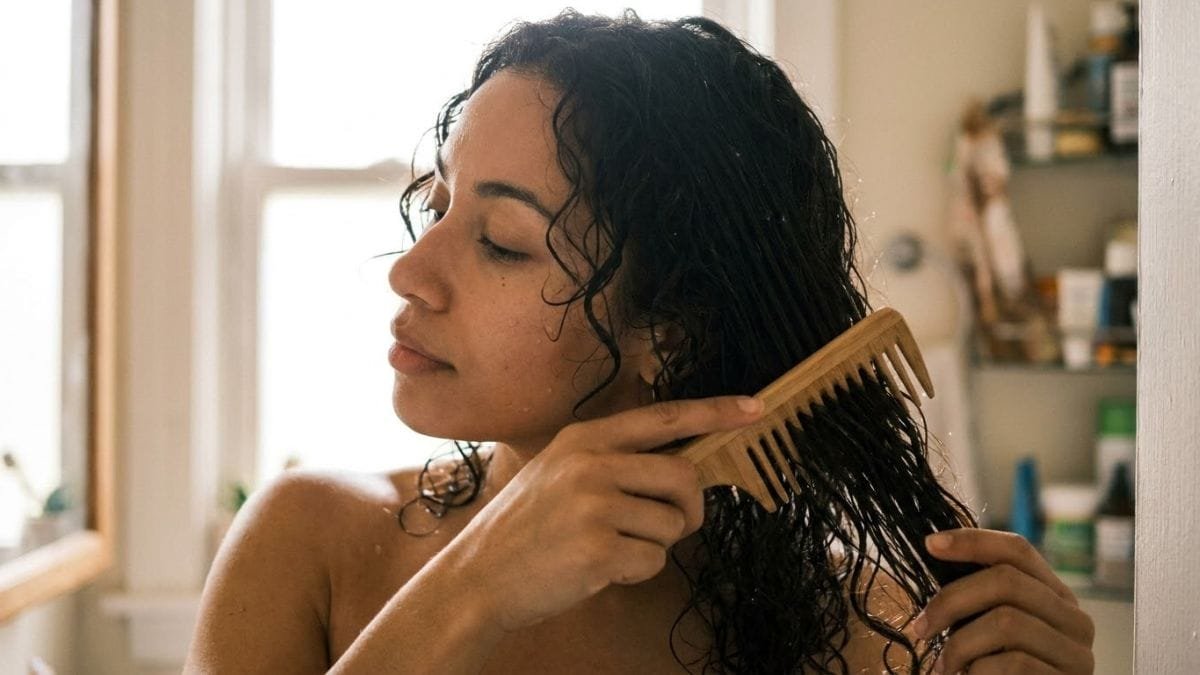
The American Academy of Dermatology (AAD) lists the usual causes in its guide to habits that damage hair: rubbing shampoo through the lengths, skipping conditioner, rubbing hair with a towel, brushing it wet, blow drying and hot tools, long-hold styling products, tight ponytails and chemical treatments.
That list matters because it reframes the problem for anyone trying home remedies for dry hair. If a daily habit keeps scraping off what your remedy adds, the remedy will never catch up.
Fix the cause first, then add the extras. This is also why a long list of home remedies for dry hair can disappoint: each recipe is a small plus set against a daily minus, and the minus usually wins.
A useful way to audit your routine is to pick the two habits from that list that you do most often and change only those for a month. Changing everything at once makes it impossible to tell what helped, and it tends to collapse within a week.

8 Home Remedies for Dry Hair That Make Sense
- Shampoo less and aim it at the scalp. For dry, textured, curly or thick hair, the AAD’s healthy hair tips say shampooing only when needed, at least every 2 to 3 weeks, can be appropriate. The same page advises choosing products made for your hair type, which is easy to overlook when you are shopping for something that says “repair” on the front. People with straight hair and an oily scalp may do better with daily washing.
- Condition every time. The AAD says to use conditioner after every shampoo, applied to the whole length for dry or curly hair and to the ends only for fine or straight hair.
- Pat, don’t rub. Wrap hair in a towel or soft t-shirt to absorb water, then let it air dry.
- Detangle gently. Use a wide-tooth comb, starting at the ends. For straight hair, let it dry a little first. For textured or tightly curled hair, the AAD suggests combing while damp.
- Turn the heat down. Use low or medium heat, add a heat protectant, and limit hot tools to about once a week or less.
- Loosen your styles. Choose looser ponytails and covered elastics, and avoid styles that pull.
- Space out chemical services. The AAD suggests stretching color, perm or relaxer touch-ups to 8 to 10 weeks or longer, and doing only one chemical service at a time.
- Try coconut oil before washing. The evidence is narrow, as the next section explains, but it is the best studied oil in the sources reviewed.
Coconut Oil: What One Study Found
The most cited research behind kitchen home remedies for dry hair is a study in the Journal of Cosmetic Science from 2003, listed on PubMed. The researchers compared coconut oil, sunflower oil and mineral oil, measuring protein loss from hair during combing.
Coconut oil was the only oil that noticeably reduced protein loss, in both undamaged and damaged hair. Mineral oil and sunflower oil did not reduce it at all.
The authors linked this to coconut oil’s structure, which they say lets it penetrate the hair shaft. There are real limits.

The test used a specific combing protocol and applied oils before or after washing, so it does not show that coconut oil cures dryness or works for every hair type. Treat it as a sensible, low-risk option among the home remedies for dry hair, especially for the ends.
A Simple DIY Hair Mask for Dry Hair
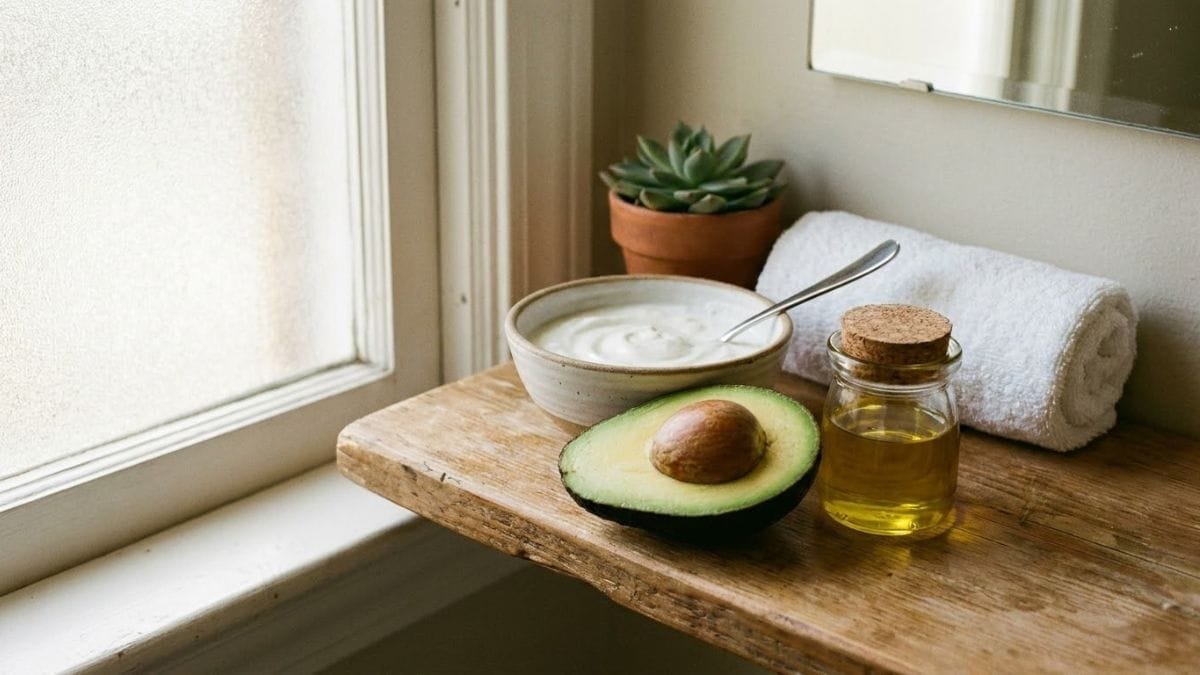
A diy hair mask for dry hair should be easy to rinse, gentle and made from ingredients you already use, which makes it the easiest of the home remedies for dry hair to try. The aim is moisture and slip, not a miracle. Here is a basic approach built on the points above.
- Warm a spoonful or two of coconut oil in your hands until it melts. Use enough to coat the ends and mid-lengths, not the roots.
- Comb it through with a wide-tooth comb so it spreads evenly.
- Leave it on for 20 to 30 minutes, wrapped in a soft towel if you like.
- Shampoo the scalp, rinse thoroughly and follow with conditioner on the lengths.
Keep it occasional, such as once a week, and stop if your scalp becomes itchy or greasy. This is a hair mask for dry damaged hair in the cheapest sense. It does not repair broken strands, but it can soften them and may reduce further protein loss, according to that one study.
How to Fix Dry Damaged Hair Over Time
If you are asking how to fix dry damaged hair, the plain answer is that severely damaged strands cannot be fully rebuilt. What you can do is stop adding damage and let new, healthier hair grow in. Trimming the worst ends removes the part that cannot be saved, and a consistent routine protects the rest.
A realistic plan runs in three phases. In the first month, change the habits listed above. In the second and third months, keep conditioning every wash and heat styling minimal.
Over six months or more, new growth replaces older, damaged lengths, and that is when the difference is easiest to see. Sun matters too: the AAD suggests a leave-in product with zinc oxide or a wide-brimmed hat after color treatments.
A Dry Hair Remedy for Swimmers
Pool water is hard on hair. The AAD recommends a swim cap, rinsing hair straight after swimming, using a swimmers’ shampoo and finishing with a deep conditioner. If you swim often, this routine does more for dry hair than any single mask.
What to Skip
Some popular home remedies for dry hair add risk without reliable benefit. Brushing a hundred strokes a day is a myth, and the AAD says hair never needs it. Long-hold styling products can stiffen hair and make breakage more likely.
Mixing several chemical services in one week is another common mistake. If a recipe tells you to leave acidic or raw ingredients on your scalp for an hour, be careful. The sources reviewed give no evidence that such mixtures help, and a patch test on your inner arm costs nothing.
When Dryness Is Not Just Dryness
Dry hair is usually a care problem, but sometimes it points to something else. The AAD advises seeing a board-certified dermatologist if changes in habits do not help, especially if hair is thinning or falling out.

A dermatologist can check the scalp and look for causes that no mask will touch, and that visit is worth more than months of experimenting with recipes.
For more ideas on supporting hair from the inside, read BitComfy’s guide to natural tips to improve hair, skin and nails. It pairs well with a gentler routine.
FAQs
What is the best home remedy for dry hair?
The best-supported one is not an ingredient but a habit set: less frequent shampooing on the scalp, conditioner every wash, gentle drying and less heat. Coconut oil is a reasonable add-on based on one lab study.
How often should I wash dry hair?
The AAD says dry, curly or thick hair may be washed only when needed, at least every 2 to 3 weeks, while straight hair with an oily scalp may need daily washing. Adjust to your scalp.
Does coconut oil really fix damaged hair?
It reduced protein loss in a 2003 study, but that does not mean it repairs damage. Think of it as protection for the ends, not a cure.
Can I use home remedies for dry hair every day?
There is no source here supporting daily use. Weekly is a safer starting point, and stop if your scalp becomes itchy or greasy.
When should I see a dermatologist?
See a board-certified dermatologist if hair is thinning, falling out or still dry after weeks of better care.
Conclusion
The best home remedies for dry hair are mostly habits: shampoo the scalp, condition the lengths, pat dry, comb gently and turn the heat down. Coconut oil has some support among home remedies for dry hair from a 2003 study, though that test was narrow, and no mask can rebuild badly damaged strands.
Trim the worst ends, give new growth time, and speak to a board-certified dermatologist if thinning or scalp problems appear. Your next step is simple: skip one heat styling session this week, pat your hair dry instead of rubbing it, and condition after every wash for the next month before judging whether any extra remedy is worth buying.