
Low porosity vs high porosity hair describes how easily the outer layer of your hair lets water and products in and out. Low porosity hair resists moisture, while high porosity hair absorbs it quickly and loses it just as fast.
This guide explains the five main differences, how people test porosity at home, and what the evidence does and does not show. Knowing where you sit in the low porosity vs high porosity hair spectrum helps you choose product textures and avoid wasting money.
It is general information, not medical advice.
Key Takeaways
Key Takeaways
- Porosity describes how the hair cuticle, the overlapping outer scales of each strand, lets moisture pass in and out.
- A review in the International Journal of Trichology says damaged hair becomes very porous and swells as it absorbs water.
- Heat, bleach, dye, relaxers and friction can all raise porosity over time, so porosity is not always fixed.
- Home tests such as the float test are popular but not official diagnostics, and no source reviewed here validates them.
- Low porosity vs high porosity hair needs different product textures, but most care advice online is practical, not proven in trials.
What Porosity Means
Each hair strand has an outer layer called the cuticle, made of overlapping scales. A review in the International Journal of Trichology describes the cuticle as the hair’s protective surface, with a fatty layer that helps it repel water.
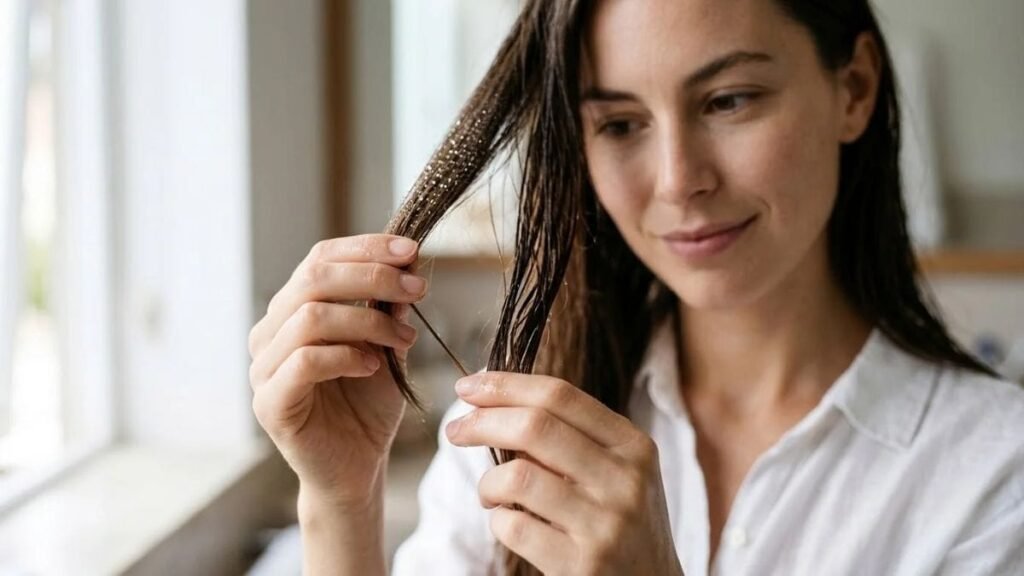
Porosity is a popular word for how well that surface lets water pass through. In everyday use, low porosity vs high porosity hair is a way to describe tightly packed cuticles versus lifted or damaged ones.
The term is common in beauty writing, but it is not a formal medical diagnosis. Treat it as a practical description of how your hair behaves, not a score.
Many people also describe a middle group, often called medium or normal porosity, where the cuticle lets in moisture at a balanced rate. Most hair is a mix, and different sections of the same head can behave differently.
Low Porosity vs High Porosity Hair: The 5 Differences
The five differences below come from what hair care explainers commonly describe, combined with the structure described in the Trichology review. They are general patterns, and real hair often sits somewhere in between.
- Cuticle: Low porosity hair has tightly packed cuticles. High porosity hair has lifted, gapped or damaged ones.
- Water: Low porosity hair is slow to get wet and slow to dry. High porosity hair soaks up water fast and dries fast.
- Products: Products tend to sit on top of low porosity hair. High porosity hair absorbs them quickly but may not hold them.
- Feel: Low porosity hair often feels smooth but can feel coated or heavy. High porosity hair often feels rough, dry or tangly.
- Common problem: Low porosity hair struggles with buildup. High porosity hair struggles with frizz and breakage.
Signs of Low Porosity vs High Porosity Hair
You can spot clues in daily life. These signs are common descriptions, not a clinical checklist.
- Signs of low porosity: Products pile up on the surface, hair takes a long time to get fully wet and it can take hours to air dry.
- Signs of high porosity: Hair gets wet fast, dries fast, tangles easily and often looks frizzy or dull.
- Mixed signs: Ends are often more porous than roots, since they are older and have had more wear.
That last point matters, because the ends of long hair have seen years of heat, brushing and sun. Your roots and ends may need slightly different care.
Quick Comparison Table
This table is a summary of those commonly described patterns, not a clinical scale.
| Feature | Low porosity | High porosity |
|---|---|---|
| Cuticle | Tight and flat | Lifted or damaged |
| Water absorption | Slow | Fast |
| Drying time | Long | Short |
| Product response | Sits on hair | Absorbs then fades |
| Typical issue | Buildup | Frizz, breakage |
What Changes Porosity in Low Porosity vs High Porosity Hair
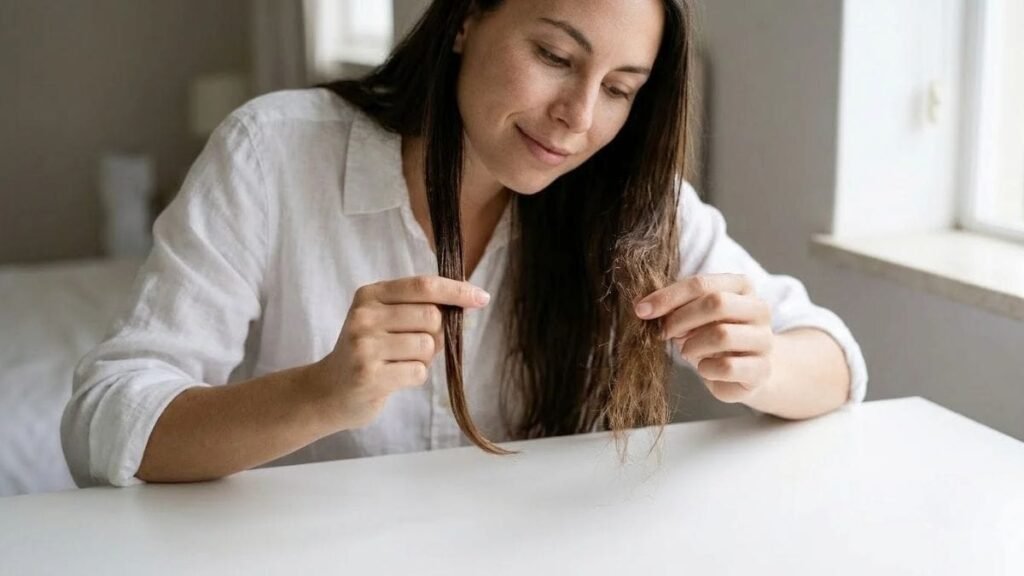
Some porosity is natural, but much of it changes with how hair is treated. The Trichology review states that damaged hair becomes very porous, and that alkaline chemical treatments can remove the fatty layer that helps hair repel water.
It also notes that friction from rough washing, drying, brushing and sunlight can disrupt the cuticle and lower the lipid content of the surface. Bleach, dye and relaxers can weaken the fiber further.
A WebMD article reviewed by a physician lists similar causes of hair damage, including frequent heat from dryers and curling irons, perms, color, relaxers and tight hairstyles. That means low porosity vs high porosity hair is not always a fixed trait, since care habits can shift it.
How People Test Low Porosity vs High Porosity Hair at Home
The most common test is the float test. You place a clean strand in a glass of water, and a strand that floats is said to suggest low porosity while one that sinks quickly suggests high porosity. Another is the spray test, where you mist dry hair and watch whether the water beads up or soaks in.
Several explainers admit these tests are weak. One hair brand says its tests are not official diagnostics, and another notes that the float test can be misleading and suggests combining tests or seeing a professional.
No study opened for this guide validates the float test. If you want to try it, treat the result as a clue and watch how your hair behaves in real life instead.

Care Ideas for Low Porosity Hair
In low porosity vs high porosity hair care, the goals differ. Because the cuticle is tight, the goal is to help products absorb without building up. These ideas are common advice, not results from trials.
- Use lightweight, water-based products and avoid heavy butters and oils.
- Apply conditioner to damp, warm hair and rinse well.
- Use a clarifying shampoo now and then if products seem to sit on your hair. The AAD notes a clarifying shampoo can help when you use gels, oils or creams.
- Try gentle warmth, such as a warm towel, during deep conditioning.
Care Ideas for High Porosity Hair
Here the goal is to keep moisture in and reduce damage, which is the other half of caring for low porosity vs high porosity hair. The Trichology review adds that oils which penetrate the fiber may reduce water uptake and swelling, which may lower repeated swelling and drying stress.
- Use richer conditioners and leave-ins, and consider a light oil to help seal in moisture.
- Limit heat, and use a heat protectant. The AAD advises low or medium settings.
- Blot hair with a towel or t-shirt instead of rubbing it, as the AAD recommends.
- Space out bleach, dye and relaxers, and ask a stylist about gentler options.
Habits That Help Any Porosity
Some habits suit both ends of the low porosity vs high porosity hair range. The AAD’s healthy hair tips suggest shampooing the scalp rather than the whole length, using conditioner after shampooing, limiting heat and detangling wet hair with a wide-tooth comb.
Protect hair from sun with a hat, since ultraviolet exposure can dry hair. Trim split ends as they appear, because they cannot be repaired. For more ideas, see our guide to natural home remedies for dry and damaged hair.
A One Week Observation Plan
A simple way to learn your hair is to watch it for a week. This plan is a suggestion, not a validated test.
- Note how long your hair takes to feel fully wet in the shower.
- Note whether products absorb or sit on top after you apply them.
- Note how long it takes to air dry.
- Note how it feels at the ends versus the roots.
After a week, you should have a clearer picture of where you sit in the low porosity vs high porosity hair range, and you can adjust one product at a time.
Mistakes to Avoid
- Treating a home test as a diagnosis. It is only a rough clue about low porosity vs high porosity hair.
- Layering heavy products on low porosity hair. This can cause buildup.
- Ignoring damage in high porosity hair. Heat and chemicals keep raising porosity.
- Changing everything at once. Change one thing at a time to see what works.
When to See a Professional
See a dermatologist if your hair is thinning, breaking suddenly or your scalp is itchy or painful. A trichologist or a skilled stylist can also assess your hair in person.
Our article on natural tips to improve hair, skin and nails covers general habits for stronger hair.
FAQs
What is the difference between low porosity vs high porosity hair?
Low porosity hair has tight cuticles that resist moisture. High porosity hair has lifted or damaged cuticles that absorb and lose moisture quickly.
Can porosity change?
Yes, to a degree. Heat, chemical treatments and friction can raise porosity, according to the Trichology review.
Is the float test accurate?
It is a rough clue at best. Explainers call such tests unofficial, and no study reviewed here validates them.
Does low porosity vs high porosity hair affect how I wash it?
It can. Low porosity hair may need an occasional clarifying wash, while high porosity hair may need a gentler, less frequent routine with more conditioner.
Which porosity is better?
Neither is better. Each needs a different approach, and healthy hair of any type is the goal.
Conclusion
Low porosity vs high porosity hair comes down to how the outer layer of each strand handles water. Low porosity hair resists it and high porosity hair lets it in and out, and both can be cared for with the right textures and gentle habits.
The evidence has limits. The structure comes from a review, but the home tests and product advice are popular practice, not proven. Your next step: note how your hair absorbs water and products for a week, then change one product at a time.
Treat any label as a guide, not a verdict on your hair, and see a professional if breakage or thinning worries you.