

A night routine for better sleep starts with a steady bedtime, an earlier end to caffeine and screens, a dim and cool room, and a short way to set worries aside. This guide explains a night routine for better sleep in seven steps, with a 60 minute timeline and a plan for nights you cannot sleep.
Key Takeaways
- A night routine for better sleep starts with the same bedtime and wake time every day, including weekends, according to the CDC and Mayo Clinic.
- The CDC says adults aged 18 to 60 need 7 or more hours, and suggests turning off electronic devices at least 30 minutes before bed.
- Mayo Clinic suggests writing worries down and setting them aside for tomorrow, and getting up if you cannot fall asleep within about 20 minutes.
- A University of Texas at Austin review linked a warm bath or shower about 90 minutes before bed with falling asleep about 10 minutes sooner.
- A suggested approach: change one step at a time, and speak with a doctor if poor sleep is frequent.
What a Night Routine for Better Sleep Is and What the Evidence Says
A night routine is the set of steps you repeat in the hour or two before bed. The CDC says adults aged 18 to 60 need 7 or more hours of sleep, and advises the same bed and wake times each day. Those two ideas anchor everything below.
Mayo Clinic adds that most adults need at least 7 hours but no more than about 8 hours in bed, with the same schedule on weekends. Both sources describe general habits, not a single perfect routine, so test the steps and keep the ones that suit you.

Why a Night Routine for Better Sleep Often Fails
Many people build a long evening ritual of baths, teas and stretches, then drop it after a busy week. A routine with ten steps asks too much of a tired person, and one missed step can feel like failure.
The answer to a night routine for better sleep that lasts is to keep it short and flexible. Start with the two or three steps the CDC and Mayo Clinic agree on, and add the rest only if they help.
7 Steps: Build a Night Routine for Better Sleep
Step 1: Set a Fixed Bedtime and Wake Time
Choose a wake time you can keep seven days a week, then count back at least seven hours. Both the CDC and Mayo Clinic advise a consistent schedule, including weekends. A suggested approach: move your bedtime earlier by 15 minutes at a time.
Step 2: Stop Caffeine and Heavy Meals Early
The CDC advises avoiding caffeine in the afternoon or evening, alcohol before bedtime and large meals before bed. Mayo Clinic says nicotine and caffeine can take hours to wear off and that alcohol can disrupt sleep later in the night. Don’t go to bed hungry either.

Step 3: Put Screens Away and Dim the Lights
The CDC suggests turning off electronic devices at least 30 minutes before bed. A small Harvard Medical School study of 12 people found that reading on an iPad before bed delayed melatonin and made people sleepier the next morning than reading a print book. It was a small, short study.
Step 4: Try a Warm Bath or Shower
A University of Texas at Austin review of previous research linked a warm bath or shower 1 to 2 hours before bed with better sleep. About 90 minutes was optimal, and the water was 104 to 109 degrees Fahrenheit. The studies varied a lot, so treat it as an option.
Step 5: Write Down Worries and Prepare for Tomorrow
Mayo Clinic suggests trying to resolve concerns before bed, or writing them down and setting them aside for tomorrow. A suggested approach: keep a notepad by the sofa and spend five minutes listing tomorrow’s tasks and any worries.

Step 6: Make the Bedroom Cool, Dark and Quiet
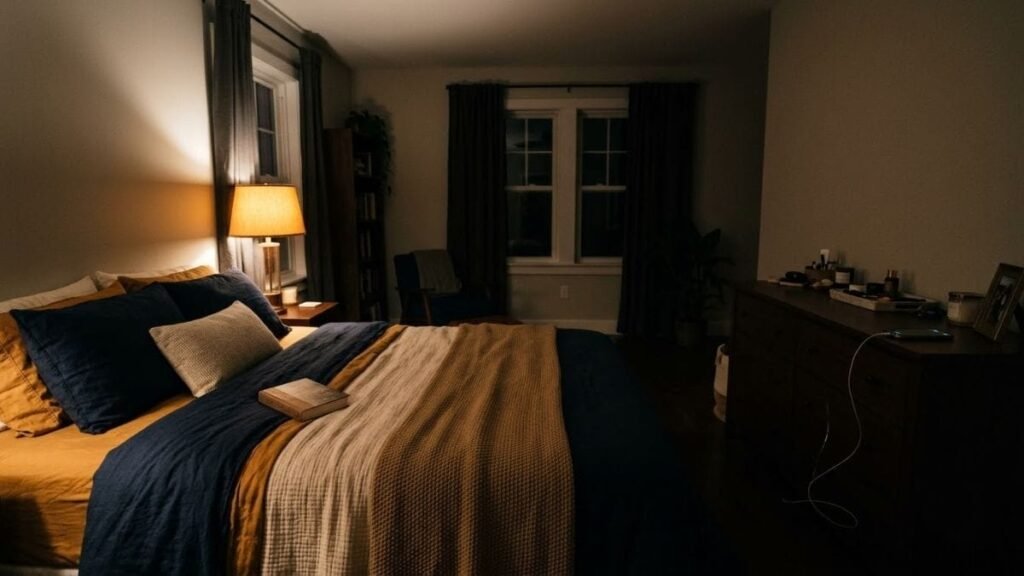
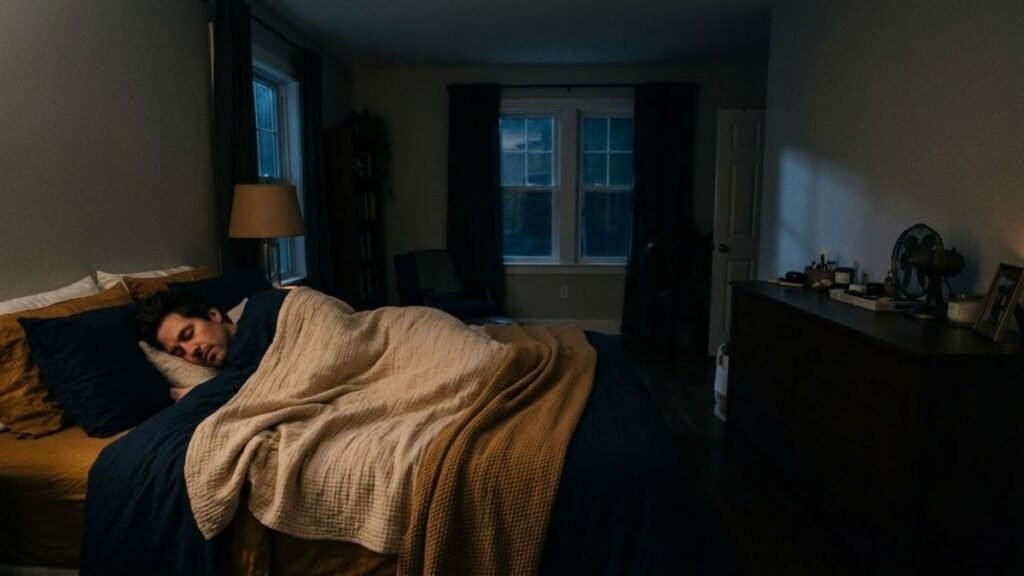
Both the CDC and Mayo Clinic recommend a quiet, cool bedroom, and Mayo adds dark. Close the curtains, silence notifications and keep the room tidy. Use the bed for sleep, and keep work out of the room where you can.
Step 7: Get Up If You Cannot Sleep
Mayo Clinic advises that if you cannot fall asleep within about 20 minutes, you get up, do something relaxing and return to bed when tired. Avoid your phone while you wait. Dim light and a quiet activity keep the evening calm.
A 60 Minute Night Routine for Better Sleep: Sample Timeline
The table below places the steps into one evening. The clock times are author suggestions for a 10:30 p.m. bedtime, and only the 30 minute screen rule comes directly from the CDC.
| Time | Step | Why |
|---|---|---|
| 9:00 p.m. | Warm bath or shower, then dim the lights | The UT review linked this with falling asleep sooner |
| 9:30 p.m. | Write tomorrow’s tasks and worries | Mayo Clinic: set concerns aside |
| 9:45 p.m. | Prepare clothes, bag and water | Fewer decisions in the morning (author suggestion) |
| 10:00 p.m. | Phone and screens off | CDC: at least 30 minutes before bed |
| 10:00 to 10:30 p.m. | Read a print book or stretch gently | Calm activity (author suggestion) |
Picture a Tuesday. You switch off the kitchen light at 9:00 and shower. At 9:30 you write three tasks for tomorrow, and at 10:00 the phone goes on its charger. You read a printed book until you feel sleepy. That plain sequence is a night routine for better sleep.
Shorten or lengthen the timeline to fit your evening. The goal is a repeatable order, not exact times. Even three of the five rows can start a useful night routine for better sleep.
Daytime Habits That Support a Night Routine for Better Sleep
Daytime choices also shape a night routine for better sleep. Mayo Clinic notes that regular physical activity helps sleep, although intense exercise close to bedtime should be avoided, and that time outdoors each day may also help. It advises keeping naps to an hour or less and not late in the day.
For evening drinks, read our drinks to help sleep guide. For the other end of the day, our morning routine ideas guide shows how a steady wake time starts the routine, and the habits for health guide lists more starter habits.
How to Make a Night Routine for Better Sleep Stick
A suggested approach: change one step per week and attach it to something you already do, such as brushing your teeth. If you slip, resume the next night without trying to catch up on sleep. Weekend lie-ins weaken a night routine for better sleep.
Small steps count. A bath only on Fridays or a screen curfew only on weeknights is still progress. Over several weeks, notice how fast you fall asleep and how you feel in the morning, and keep what helps.
Common Mistakes in a Night Routine for Better Sleep
A suggested approach is to avoid three errors. The first is changing everything at once. The second is checking the clock each time you wake, which adds pressure. The third is using alcohol as a sleep aid, because Mayo Clinic says alcohol can disrupt sleep later in the night.
Another trap is a routine so long that you skip it. A short version of five or ten minutes beats a perfect version that you abandon by Wednesday.
When to Talk to a Professional
Occasional sleepless nights are normal, but Mayo Clinic says to contact your health care provider if you often have trouble sleeping, so any underlying cause can be found. Speak with a doctor before relying on supplements. This guide is general information and not medical advice.
FAQs
How long should a night routine for better sleep be?
No source reviewed sets an ideal length. A suggested approach is 30 to 60 minutes, with the CDC screen rule of at least 30 minutes before bed. A shorter routine you repeat is better than a longer one you skip.
How many hours of sleep do adults need?
The CDC says adults aged 18 to 60 need 7 or more hours, adults aged 61 to 64 need 7 to 9 hours, and adults 65 and older need 7 to 8 hours.
What should I do if I cannot fall asleep?
Mayo Clinic advises getting up after about 20 minutes, doing something relaxing and returning to bed when tired. Avoid your phone and bright lights while you wait.
Does a warm bath help with a night routine for better sleep?
A University of Texas at Austin review linked a warm bath or shower 1 to 2 hours before bed with better sleep, with about 90 minutes optimal. The studies varied, so it is an option and not a guarantee.
When should I see a doctor about sleep?
Mayo Clinic says to contact your health care provider if you often have trouble sleeping. Persistent loud snoring, daytime sleepiness or low mood are also good reasons to ask for advice.
Conclusion
A night routine for better sleep is a repeatable order of small steps: a steady bedtime, early caffeine cutoff, dim lights, screens away, a warm bath if you like it, worries on paper and a cool, dark room.
Start with one step tonight and add another each week, keeping the evening calm and the steps few. Keep the same wake time on weekends, get up if you cannot sleep after about 20 minutes, and speak with a doctor if poor sleep is frequent.
Small, steady changes are enough to build a night routine for better sleep that you can keep for months, not just a week.