

How to detangle curly hair safely comes down to doing it when hair is wet and coated in conditioner, using your fingers or a wide-toothed comb, and working from the ends up. Rushing or brushing dry curls is the fastest way to cause breakage and frizz.
This guide gives seven steps, a short tool guide, tips for stubborn knots and common mistakes. Many people find that how to detangle curly hair is the single skill that most improves their wash day.
It is general information, not medical advice.
Key Takeaways
Key Takeaways
- The American Academy of Dermatology (AAD) says to detangle wet hair with a leave-in conditioner, using your fingers or a wide-toothed comb or brush made for curly hair.
- The AAD also says to avoid brushing curly hair while it is dry, because that can cause breakage and frizz.
- Start at the ends and work toward the roots, one section at a time, and comb thick curly hair in the shower before rinsing out conditioner.
- A review in the International Journal of Trichology reports that wet hair can stretch about 30% without damage, but pulling beyond that can permanently change the strand.
- Knowing how to detangle curly hair takes patience, and a dermatologist can help with pain, itching or sudden hair loss.
Why Curly Hair Tangles
Curls twist around each other as they grow, so strands catch and knot more easily than straight hair. Dry hair also snags more. Friction from rough towel drying, brushing and sleep can add to the problem.

A review in the International Journal of Trichology explains that friction from washing, drying and brushing can disrupt the cuticle, the outer layer of the hair. That is why learning how to detangle curly hair gently matters for long-term hair health.
What You Need for How to Detangle Curly Hair
You do not need a lot of tools. The right basics make detangling much easier.
| Tool | Why it helps |
|---|---|
| Conditioner or leave-in | Adds slip so strands glide past each other |
| Wide-toothed comb | Moves through curls with less pulling |
| Your fingers | Loosen knots gently before combing |
| Brush made for curly hair | Optional, used on wet hair only |
| Spray bottle of water | Re-wets sections as they dry |
The AAD recommends a wide-toothed comb or a brush made for curly hair, and fingers. It does not recommend a fine-tooth comb or a standard brush on dry curls.

Before You Start: Prepare Your Hair
Preparation saves time. Take a moment to check your tools and your hair before you begin.
- Make sure your comb has smooth, wide teeth with no rough seams.
- Remove rings and bracelets that can snag.
- Keep a towel nearby for dripping water.
- Plan for at least 15 to 20 minutes on wash day, which is a suggestion, not a rule.
Rushing is the main enemy of how to detangle curly hair without breakage, so give yourself enough time.
How to Detangle Curly Hair: 7 Steps
These steps draw on AAD curly hair guidance and the AAD’s healthy hair tips. Go slowly, since patience prevents breakage.
Step 1: Start with wet hair and conditioner
The AAD says to detangle wet hair with a leave-in conditioner. Its healthy hair tips add that thick, curly hair is best combed in the shower before the conditioner is rinsed out.
Conditioner gives slip, which means strands slide past each other. Dry curls do not slide, which is why they snag.
If you use a leave-in, apply it evenly from the mid-lengths to the ends, where hair is oldest and driest.
Step 2: Divide hair into sections
The AAD notes that long or thick hair is easier to manage in sections. Clip the sections you are not working on so they do not retangle.
Four to six sections is common, though your hair length and thickness decide. Smaller sections make how to detangle curly hair faster in the long run, even if they feel slower at first.
Step 3: Loosen knots with your fingers first
Use clean fingers to separate larger tangles gently. This reduces the force on your comb and helps you feel where the knots are.
Step 4: Comb from the ends up
The AAD advises starting at the ends and working upward. A WebMD article reviewed by a physician also suggests detangling the ends first.
Hold the section above the knot with one hand so the root is not pulled. Work in small strokes.
This is the heart of how to detangle curly hair: short, gentle passes that free the ends first, then move up. Each pass loosens the section above it, so you rarely need to force anything.
Step 5: Add more conditioner where it snags
If the comb catches, stop. Add more leave-in or conditioner to that spot and try again. Never yank, since the Trichology review reports that pulling wet hair past about 30% stretch can permanently change the strand.
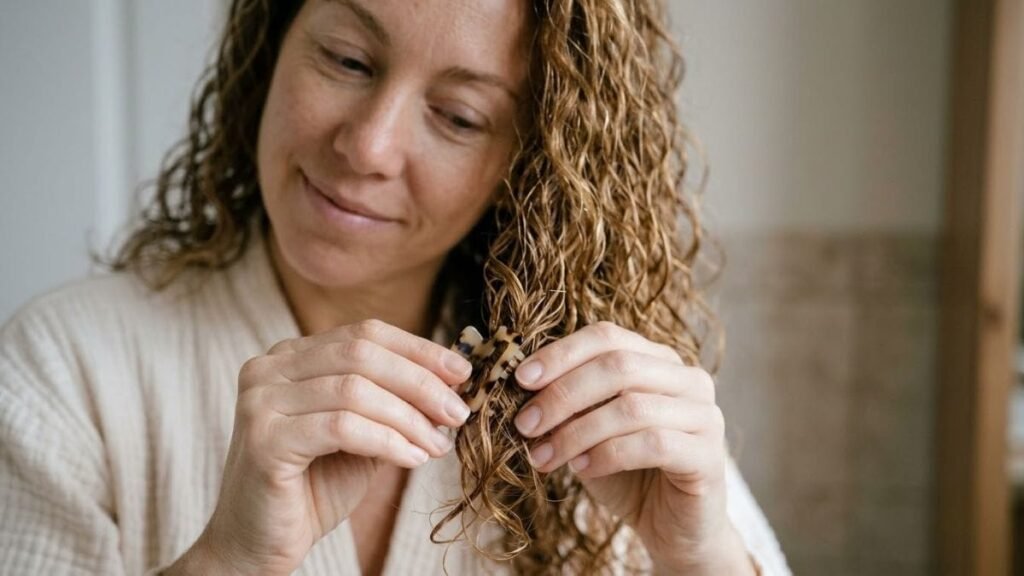
Step 6: Rinse and blot dry
After detangling, rinse thoroughly so no residue is left on your scalp. The AAD advises gently blotting hair with a towel or t-shirt, because rough rubbing can cause damage.
Step 7: Style and protect
Apply your usual leave-in or styling product to wet hair, then air dry or use a diffuser on low heat. The AAD says heat and UV can dry out curly hair, so use low or medium heat and a heat protectant.
How to Detangle Curly Hair of Different Curl Patterns
Curl patterns vary from loose waves to tight coils, and your pattern changes how you work. These notes are general and not from a study.
- Loose curls and waves: Often tangle less, but still need wet detangling to avoid frizz.
- Medium curls: Benefit from sections and a leave-in with good slip.
- Tight coils: Often need more time, more conditioner and smaller sections, because shrinkage hides the true length of the hair.
Whatever your pattern, the same rule applies: how to detangle curly hair well means moving slowly and keeping hair wet.
What to Do With Stubborn Knots and Mats
A tough knot needs time, not force. The same principles of how to detangle curly hair apply, only with more patience. This advice is common practice, not from a study.
- Add a generous amount of conditioner or a light oil to the knot.
- Use your fingers to pick the knot apart from the outside in.
- Work slowly and rest if your scalp feels sore.
- Avoid pulling hard. If a mat is large, ask a stylist for help rather than cutting it yourself.
Our guide to natural home remedies for dry and damaged hair offers more gentle care ideas for hair that tangles easily.
Detangling Between Washes
You do not need to detangle fully every day. Over-manipulating curls can cause frizz and breakage, so save the full detangle for wash day. A light mist of water with a little leave-in and a quick finger detangle may be enough.
The AAD suggests sleeping with your hair in a loose ponytail, braid or twists, and using a satin or silk pillowcase or bonnet to reduce frizz and breakage. This helps prevent knots from forming overnight, and it keeps how to detangle curly hair easy on wash day.

Common Mistakes When Learning How to Detangle Curly Hair
- Brushing dry. The AAD says to avoid brushing hair while it is dry.
- Starting at the roots. Work from the ends up instead.
- Using too little conditioner. Slip protects the strand.
- Rushing. Tugging can stretch wet hair beyond its safe range.
- Detangling every day. Too much handling can cause frizz and breakage.
- Using a fine-tooth comb. Choose a wide-toothed comb.
For other hair habits that help, see our tips to improve hair, skin and nails.
After You Detangle: Aftercare
Once the knots are out, protect the result. Apply your styling products while hair is wet, keep your hands out of your curls as they dry and avoid pulling a brush through them later.
Curls that stay detangled between washes are easier to maintain, and the habit of how to detangle curly hair gently becomes second nature with practice.
When to See a Professional
See a dermatologist if detangling is painful, if you notice patches of thinning or if you have unexplained hair loss. The AAD notes that unexplained hair loss can signal a medical condition.
A stylist who works with curls can also show you how to detangle curly hair in a way that suits your texture, and can safely remove severe mats.
If you often find shed hair in your comb, remember that some shedding is normal. Notice whether it increases and mention it to a doctor if it does.

FAQs
Should I detangle curly hair wet or dry?
Wet, with conditioner. The AAD says to avoid brushing curly hair while it is dry.
What is the best comb for curly hair?
A wide-toothed comb or a brush made for curly hair, according to the AAD, or your fingers.
How often should I detangle curly hair?
Once on wash day is usually enough. Between washes, use a light mist and your fingers.
Once on wash day is usually enough. Between washes, use a light mist and your fingers.
Longer hair tangles more because the ends are older and drier, so use smaller sections and more conditioner. Curl patterns can also change over time, so adjust your method.
Why does my hair tangle so much overnight?
Friction and dryness cause knots. A loose braid, twists and a satin pillowcase can help, as the AAD suggests.
Conclusion
How to detangle curly hair is simple to remember: use wet hair, plenty of conditioner, a wide-toothed comb or your fingers, and work from the ends up in sections. Go slowly, and never brush dry curls, because patience protects the hair you have.
The evidence has limits. The core steps come from dermatology guidance and one hair science review, and the knot tips are common practice. Your next step: try detangling in the shower with conditioner in your hair at your next wash, and see a doctor if you have pain or sudden hair loss.
Small, careful habits add up over time.