
How to get shiny hair starts with a smooth, well-moisturized strand and a gentle routine. Shine comes from hair that reflects light evenly, so the goal is to reduce damage, add moisture and avoid buildup.
This guide covers eight habits based on dermatology advice, a quick table, common mistakes and what the evidence does not show. Most of the advice on how to get shiny hair is free, and it works with the products you already own.
It is general information, not medical advice.
Key Takeaways
Key Takeaways
- Shiny hair is usually healthy hair with a smooth surface, so most tips for how to get shiny hair are about preventing damage.
- American Academy of Dermatology (AAD) dermatologist Zoe Draelos says conditioner adds shine, reduces static and improves strength.
- Shampoo the scalp rather than the whole length, blot dry instead of rubbing, and limit heat to low or medium settings with a heat protectant.
- Many online lists on how to get shiny hair include extras such as cold rinses and special foods, but no source reviewed here proves them.
- See a dermatologist for sudden shedding or unexplained hair loss.
What Makes Hair Look Shiny and Healthy
Each strand is covered in overlapping scales called the cuticle. A review in the International Journal of Trichology explains that friction from rough washing, drying, brushing and sunlight can disrupt the cuticle, and that chemical treatments can weaken the fiber.

Hair is often described as shiny when that surface is smooth and reflects light evenly. Rough, lifted or damaged cuticles scatter light and make hair look dull. That explains why how to get shiny hair is mostly a question of protecting the cuticle.
Shine is also a matter of perception. Straight hair reflects light in a smooth band, while curly hair scatters light more, so tightly curled hair may look less glossy even when it is healthy. Aim for smooth, well-moisturized hair, not a mirror finish.
How to Get Shiny Hair: 8 Habits
These habits come mainly from AAD guidance and a hair science review. Try them together, since small changes add up.
1. Shampoo the scalp, not the whole length
AAD dermatologist Zoe Draelos advises shampooing the scalp, not the whole length. The AAD’s healthy hair tips agree and say to apply shampoo to the scalp to avoid overdrying.
Washing only the lengths in the way Draelos describes can leave hair dull and flyaway, so focus on the roots and let the rinse carry suds down. If your scalp is oily, daily washing may be fine, as Draelos notes.
2. Condition after every wash
Draelos says conditioner adds shine, reduces static, improves strength and offers some UV protection. The AAD says fine or straight hair may need it on the ends only, while dry or curly hair needs it on the full length.
Putting conditioner on a fine scalp can make hair look limp, so adjust the amount to your hair type.
3. Blot instead of rubbing
The AAD advises gently blotting hair with a towel or t-shirt. Rough rubbing can cause damage, which the Trichology review links to cuticle wear.
A soft cotton shirt works as well as a towel. Press, squeeze and release, and leave your hair damp before styling.
4. Limit heat and protect what you use
The AAD says to limit blow-drying and flat or curling irons, use low or medium settings and apply a heat-protectant product. The Trichology review adds that repeated flat-iron passes on the same area are aggressive to hair proteins.

5. Detangle wet hair gently
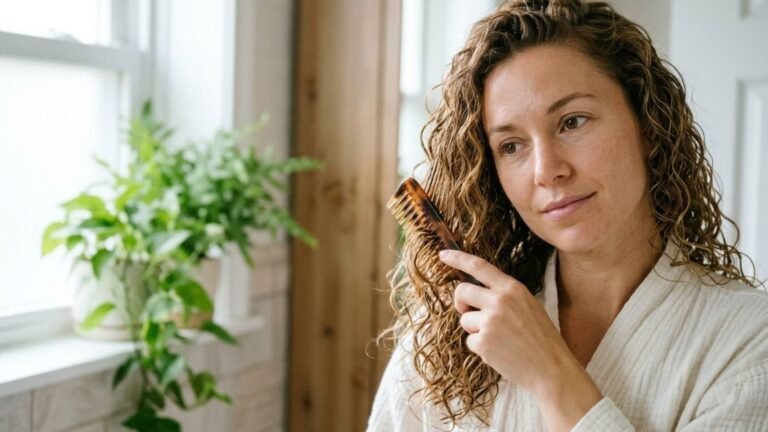
Use a wide-tooth comb on wet hair, starting at the ends and working up, according to the AAD. Snagging and pulling roughens the cuticle.
Thick, curly hair is best combed in the shower with conditioner still in, the AAD adds. Straight hair should dry a little before combing.
6. Clarify when products build up
If you use gels, oils, creams or pomades, the AAD suggests a clarifying shampoo before a moisturizing one. Buildup can leave hair looking flat, so occasional clarifying helps when learning how to get shiny hair.
Use it as needed, not every wash, because clarifying shampoos can be drying.
7. Protect hair from sun and chlorine
Draelos advises wetting and conditioning hair before swimming, wearing a tight swim cap and using a swimmer’s shampoo and deep conditioner afterward. The AAD also says ultraviolet rays can dry out hair, so a hat helps outdoors.
8. Trim split ends
Split ends make hair look rough and cannot be repaired. A WebMD article reviewed by a physician says the only fix is to cut them off, and suggests trims every six to eight weeks to prevent splits traveling up the strand.
Shine for Different Hair Types
The habits above suit most people, but the details change with hair type. These notes are a guide, not a rule.
- Fine or straight hair: Conditioner on the ends only, as the AAD suggests, and a light touch with products.
- Dry, wavy or curly hair: Conditioner on the full length and shampoo only as needed.
- Color-treated hair: Products made for color-treated hair, plus gentle heat habits.
No matter the type, how to get shiny hair always returns to moisture, low friction and low heat.
Quick Habit Table
| Habit | Why it helps | Source |
|---|---|---|
| Shampoo the scalp | Avoids drying the lengths | AAD |
| Condition | Adds shine, reduces static | AAD (Draelos) |
| Blot dry | Reduces friction | AAD |
| Low heat and protectant | Limits cuticle damage | AAD, Trichology review |
| Clarify as needed | Removes buildup | AAD |
| Trim | Removes split ends | WebMD |
How to Get Shiny Hair After Color or Chemical Treatment
Chemical processing can make hair look duller if it is overdone. The Trichology review says relaxers, bleach and dyes can weaken hair, and that alkaline treatments can remove the fatty layer that helps hair repel water.
If you color your hair, the AAD suggests choosing products for color-treated hair. Draelos notes that price does not determine effectiveness, so you do not need the most expensive products for how to get shiny hair.
Ask a stylist about gentler options and spacing out treatments. Our guide to natural home remedies for dry and damaged hair offers more gentle ideas.
How to Get Shiny Hair: What About Cold Rinses, Oils and Foods?
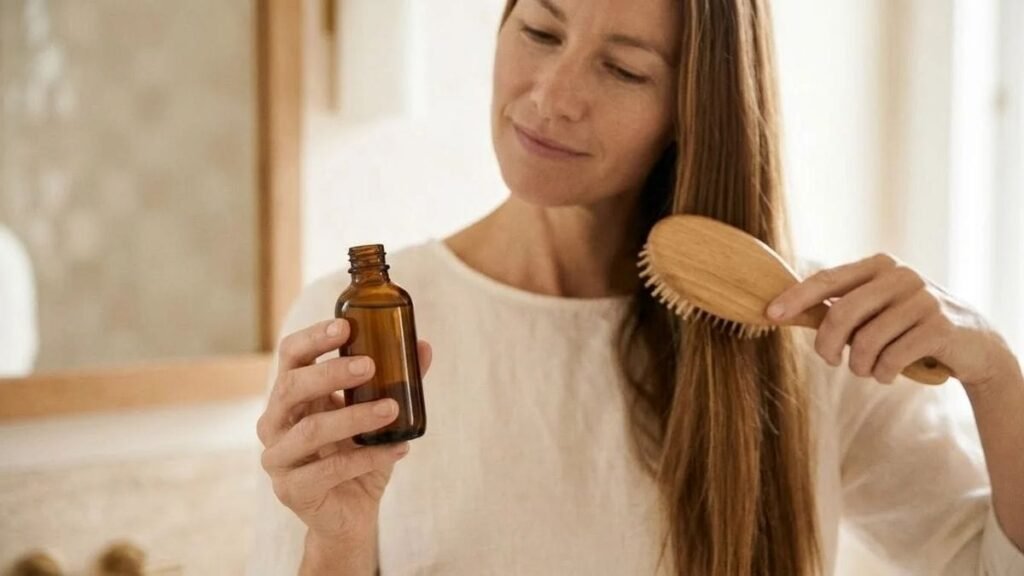
Many hair articles suggest rinsing with cold water, using oils or serums, or eating certain foods. Oils and serums can coat the hair and add temporary shine, which is a surface effect, but none of the dermatology sources reviewed here prove that a cold rinse or a specific food makes hair shinier.
Treat these as optional extras, not essentials, in any plan for how to get shiny hair. If you suspect a nutrition problem, talk to a doctor instead of guessing. Our article on natural tips to improve hair, skin and nails covers general habits.

How Long Until You Notice a Difference?
No study reviewed here gives a timeline. Hair grows slowly, so new smooth growth takes months, but gentler handling often changes how hair feels within a few washes.
Give each change two to four weeks, and change one thing at a time so you know what works. Taking photos in the same light each week can help you judge how to get shiny hair in your own routine.
Be patient, because damaged ends only improve by trimming.
Common Mistakes That Dull Hair
- Washing the lengths hard. Draelos says this can leave hair dull and flyaway.
- Skipping conditioner. You lose shine, softness and static control.
- Using high heat daily. This damages the cuticle over time.
- Rubbing with a towel. Blot or squeeze instead.
- Letting buildup stay. Clarify when hair feels coated.
A Simple Weekly Plan for How to Get Shiny Hair
This plan is a suggestion, not a tested routine. Adjust it to your hair type and how oily your scalp gets.
- Wash days: Shampoo the scalp, condition, blot and use low heat with a protectant if you style.
- Weekly or as needed: Use a clarifying shampoo if products build up.
- Every 6 to 8 weeks: Trim split ends.
- Every day: Protect hair from sun and friction.
Following a plan like this makes how to get shiny hair feel manageable.
When to See a Professional
See a dermatologist for unexplained hair loss, since Draelos notes it can signal a serious medical condition. A scalp that is very itchy, painful or flaky also deserves a check.
A stylist can help with cuts, shine treatments and gentler color. Bring notes about your routine so they can give useful advice. Mention any chemical treatments, since they affect shine.

FAQs
How can I make my hair shiny naturally?
Focus on gentle care: shampoo the scalp, condition, blot dry, limit heat and protect from sun. These are the AAD-backed basics for how to get shiny hair, and they cost little.
Does conditioner make hair shiny?
Yes. Draelos says conditioner adds shine, reduces static and improves strength.
Does cold water make hair shiny?
Many articles say so, but none of the sources reviewed here prove it. It is harmless to try, but do not rely on it.
Can I get shiny hair without special products?
Often yes. Gentle washing, conditioning, blotting and low heat do most of the work, and the AAD dermatologist notes that price does not determine effectiveness.
How often should I wash shiny hair?
It depends on scalp oil. Draelos says oily scalps may need daily washing, and the AAD says dry or curly hair needs shampoo only as needed.
Conclusion
How to get shiny hair comes down to a smooth, protected cuticle: shampoo the scalp, condition after washing, blot dry, limit heat, clarify when needed and trim split ends. These habits protect the strand and let natural shine show, without any need for costly products.
The advice has limits. The core habits come from dermatology guidance, but the claims about cold rinses and foods are not proven, and results vary by hair type. Your next step: try two or three of these habits for a month, such as blotting dry and lowering your heat setting.
Then compare photos in the same light.