On a skincare label, “natural” is largely the brand’s own description, and no product is truly chemical-free, because water, plant oils and every other ingredient are chemicals. That is why two natural skincare brands can differ widely in what sits in the jar. This guide explains what such claims can and cannot tell you, what US regulators check, and a practical way to judge natural skincare brands yourself. It is general information, not medical advice.
Key Takeaways
- “Natural” and “chemical-free” have no standard meaning in the sources reviewed, and water and plant extracts are chemicals too. Judge the full ingredient list, not the slogan.
- In the US, cosmetics, including those from natural skincare brands, need no FDA approval before sale, and the FDA says labeling claims must be truthful and not misleading.
- “Hypoallergenic” has no federal definition, and “fragrance” on a label can stand for several undisclosed ingredients.
- Natural does not mean safer: plant extracts and essential oils are recognized causes of skin allergy.
- A suggested method: ask what a brand means by “natural,” read the whole label, check how claims are backed, and patch test before regular use.
What “Natural” Actually Means for Natural Skincare Brands
Every substance is made of chemicals. Water is one, and so are aloe gel, shea butter and vitamin C. A product with no chemicals at all would be an empty jar, so “chemical-free” can only ever be a figure of speech.
Natural skincare brands use “natural” in a narrower, shifting sense. It might mean plant or mineral derived, free of synthetic ingredients, free of parabens or sulfates, or simply gentle. Those are different promises, and none of them guarantees that a product suits your skin.
The useful question is not whether a brand is natural but what it means by the word, and why that matters to you. A reader avoiding fragrance because of past rashes has a different goal from one who prefers plant-based formulas, and the same product can be right for one and wrong for the other.
What US Regulators Check and What They Leave to the Brand
The FDA’s cosmetics labeling claims page states that cosmetics do not need FDA approval before they are sold, and that the agency keeps no list of approved claims. Labels and claims must be truthful and not misleading. A product that claims to treat or prevent disease, or to change how the body functions, can legally count as a drug rather than a cosmetic. Advertising claims fall under the Federal Trade Commission.
Since the Modernization of Cosmetics Regulation Act of 2022 (MoCRA), companies must keep records supporting the safety of their products, report serious adverse events to the FDA within 15 business days, register manufacturing facilities and list their products, according to the FDA’s MoCRA summary. Some small businesses are exempt from parts of these rules.
In practice, natural skincare brands are responsible for backing their own claims, and a “natural” badge is not a regulator’s verdict. That makes your own label reading more important than it may seem.
A Decoder for Common Label Claims
The table separates what a claim on natural skincare brands can reasonably suggest from what it cannot confirm. Where the FDA pages reviewed give no definition, the table says so.
| Claim | What it suggests | What it does not tell you |
|---|---|---|
| Natural | Ingredients the brand considers plant or mineral derived | That the product is milder, safer or allergen-free, since the FDA pages reviewed do not define the term |
| Chemical-free | The brand avoids something, though it may not say what | A defined standard, since the FDA pages reviewed do not define it |
| Hypoallergenic | A marketing intent to be gentle | Anything measurable, because the FDA says there is no federal definition |
| Fragrance-free | The brand did not intend to add fragrance | A consistent standard, because the FDA says there is no federal definition |
| Unscented | A product that may smell of little | That it lacks fragrance ingredients, which the FDA says it may still contain |
| Paraben-free | One preservative family is left out | That the product is safer, since the FDA has no information showing parabens as used in cosmetics affect human health |

Are Natural Skincare Brands Safer Than Conventional Ones?
Not automatically, and that applies to natural skincare brands as much as to any other. Harvard Health Publishing notes that plant-based products are generally safe on skin but can cause reactions in some people. It cites a 2019 JAMA Dermatology editorial by two University of Pennsylvania dermatologists naming plant extracts as leading culprits in contact dermatitis, plus a study in which 6 percent of 241 botanical product users reported at least one skin reaction. That is a small sample, so treat it as a caution, not a risk rate for all natural products.
The FDA’s allergen page points the same way. It lists plant-derived essential oils and extracts, including lavender, peppermint and citrus oils, among fragrance allergens, and it does not say natural ingredients are less likely to trigger reactions.
Effectiveness is a separate question. Harvard Health’s review of clean and natural cosmetics says evidence for plant-based ingredients is limited, with some claims resting on small studies and animal research. That does not make them useless. It means a bold promise on a label deserves a request for evidence, and a plant-based label earns no exemption from the checks you would apply to any other product. For nutrients that support skin, BitComfy also has a guide to vitamins for hair, skin and nails.
Parabens
“Paraben-free” is among the most common claims on natural products. The FDA’s parabens page says the agency currently has no information showing that parabens, as used in cosmetics, affect human health. It also says it continues to review published studies and lists open questions, so the science is not closed. Avoiding them is a reasonable personal preference, but the FDA does not present it as a proven safety requirement.
Fragrance
Fragrance is where the FDA pages give the most specific guidance. According to the FDA’s fragrance page, fragrance formulas can be listed simply as “Fragrance” because they are treated as trade secrets, so the word does not reveal which compounds are inside. MoCRA directs the FDA to set fragrance allergen labeling requirements, but the summary page reviewed does not describe them. Shoppers worried about fragrance are advised to choose fragrance-free products, read the ingredient list and contact the manufacturer.
How to Choose Natural Skincare Brands in Six Steps
This is a suggested method, not a regulatory standard. It works for any of the natural skincare brands you come across, including ones that never appear on a roundup.
- Ask “natural in what way?” Write down the specific ingredient or concern behind the claim. If the brand cannot say, treat the word as a slogan.
- Read the full ingredient list. The FDA says retail cosmetics must carry an ingredient declaration, so the back of the pack is more reliable than the front. A short list you can read line by line is also easier to check than a long one.
- Flag fragrance and essential oils. If your skin reacts easily, look for fragrance, perfume and oils such as lavender or citrus, and ask the manufacturer when the label is unclear.
- Check how claims are backed. Does the brand explain its testing, say who did it and offer a way to ask questions? Companies must keep safety records under MoCRA, so asking is reasonable. Verify any certification with the certifying body rather than trusting a logo.
- Look for commercial disclosure. Reviews and roundups that earn commission should say so near the links. A list that never explains how its brands were chosen is best read as promotion.
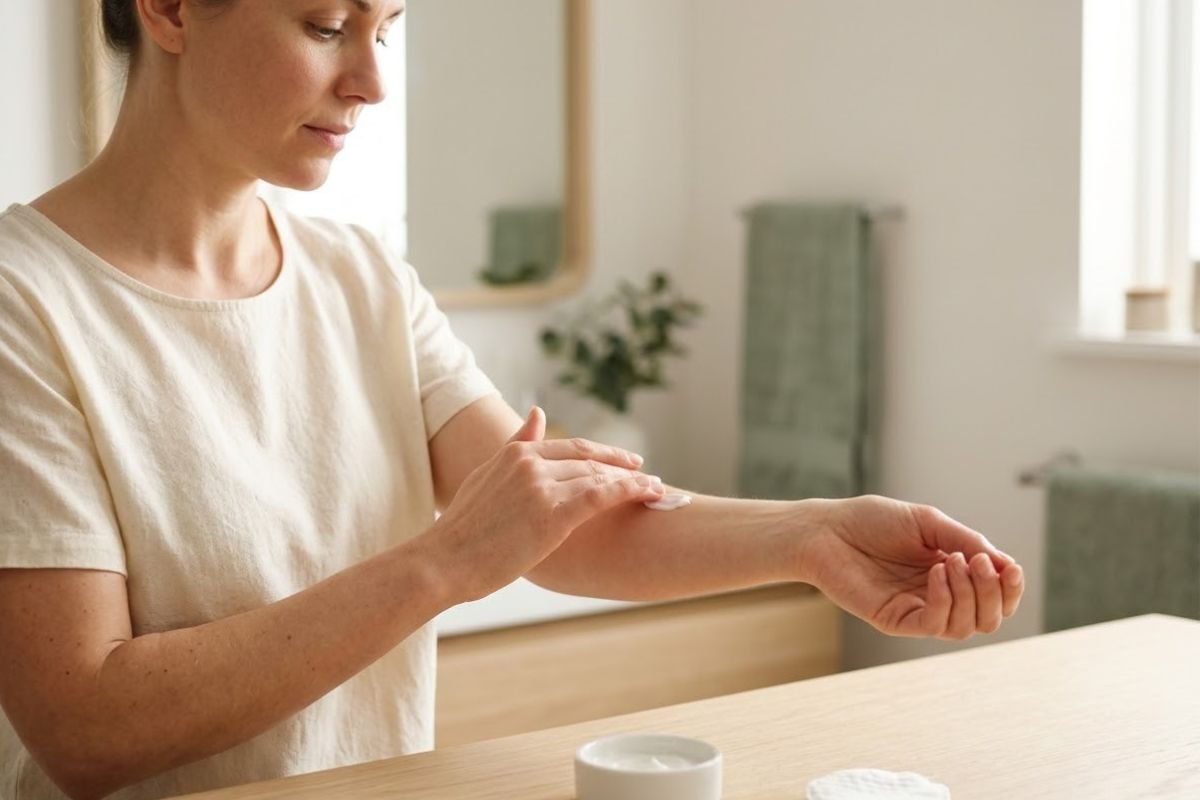
- Patch test, one product at a time. A reasonable starting point is a small patch of skin for several days before using a new product on your face. Speak to a dermatologist first if you have had severe reactions before.
How to Compare Natural Skincare Brands Side by Side
Once you have a shortlist, a simple comparison keeps the decision grounded. Put two or three products next to each other and answer the same questions for each one. What does the brand say “natural” means? How many ingredients are on the list, and can you read them? Is fragrance or an essential oil present? Does the brand explain how it backs its claims, and who to contact with questions? Is there any commercial disclosure on the page you are reading?
This kind of comparison is more useful than a ranking, because the best choice among natural skincare brands depends on your skin and your reason for choosing natural in the first place. Someone avoiding fragrance will rank the same products differently from someone avoiding synthetic preservatives. Write down your own priority first, and let it break ties. The sources reviewed do not rank any brand, and this guide does not either.
If a Product Irritates Your Skin
Stop using it. The FDA describes the typical allergic reaction as an itchy, red rash known as allergic contact dermatitis. If the rash persists, spreads or keeps returning, see a healthcare professional, who can discuss patch testing, which the FDA lists as a diagnostic option.
Hives, facial swelling or wheezing can signal a serious allergic reaction. The FDA describes anaphylaxis as rare but life-threatening and advises calling 911 if it occurs. Keep the packaging so a clinician can see the ingredient list, and avoid adding anything else new until the skin settles, so you can tell which product was responsible.
FAQs
Are natural skincare brands safer than conventional ones?
Not necessarily. Harvard Health and the FDA both identify plant extracts and essential oils as possible triggers, so natural skincare brands carry the same patch testing advice as any other. Sensitive skin usually benefits more from a short ingredient list you have patch tested than from any single label claim.
Is any skincare product really chemical-free?
No. Water, oils, extracts and preservatives are all chemicals. The phrase works as a marketing claim about excluded ingredients, so ask which ones.
What do “clean” and “non-toxic” mean on a label?
Harvard Health describes clean beauty products as based on botanical ingredients with no synthetic preservatives. The FDA pages reviewed give no definition for either term, so each brand sets its own meaning. Ask which ingredients are excluded and why.
Does the FDA approve skincare products?
No. According to the FDA, cosmetics do not need approval before sale, but companies must keep safety records, and the agency monitors products on the market and can act against violations, including warning letters.
Is “fragrance-free” the same as “unscented”?
No. The FDA says unscented products may still contain fragrance ingredients, and that neither “fragrance-free” nor “hypoallergenic” has a federal definition. Check the ingredient list for fragrance, perfume and essential oils.
Conclusion
“Natural” is a brand’s description, not a safety guarantee, so a list of natural skincare brands is best read as a set of marketing claims, not a ranking. Three things decide whether a product suits you: what the brand means by natural, how it backs that claim, and how your own skin responds. The evidence has limits. Regulators do not approve cosmetics in advance, research on plant-based ingredients is thin, and this guide is general information, not medical advice. Your next step is simple: choose one product you are considering, read its full ingredient list, patch test it, and see a dermatologist if irritation persists.
Research & Sources
Supporting sources opened and read
- U.S. Food and Drug Administration, undated: Cosmetics Labeling Claims
- U.S. Food and Drug Administration, content current as of 08/10/2026: Modernization of Cosmetics Regulation Act of 2022 (MoCRA)
- U.S. Food and Drug Administration, content current as of 10/09/2026: Allergens in Cosmetics
- U.S. Food and Drug Administration, content current as of 02/28/2022: Fragrances in Cosmetics
- U.S. Food and Drug Administration, content current as of 11/18/2025: Parabens in Cosmetics
- Harvard Health Publishing, October 29, 2020: What you should know about clean and natural cosmetics
Research Note. This guide draws on six independent sources: five from the FDA and one from Harvard Health Publishing. One FDA page shows no date, the Harvard article dates from 2020, and research on plant-based ingredients is limited. The content is general information and not a substitute for advice from a dermatologist or doctor.